
 English
 русский
 日本語
日本語 عربى
عربى Español
Content
- 1 The Short Answer: What Makes a Water Faucet Worth Buying
- 2 What a Metal Spigot Actually Does Inside a Water Faucet
- 3 Indoor Faucet Types: Kitchen and Bathroom Configurations
- 4 Valve Mechanisms Explained: Compression, Ball, Cartridge, and Ceramic Disc
- 5 Common Outdoor Spigot Styles by Application
- 6 Material Comparison: Brass, Stainless Steel, and Zinc
- 7 Finish Options and How They Affect Long-Term Appearance
- 8 Flow Rate and Water Pressure Considerations
- 9 How to Match a Spigot or Faucet to Your Property's Conditions
- 10 Installation and Placement Considerations
- 11 Freeze Protection and Seasonal Shutdown Steps
- 12 Maintenance That Extends Service Life
- 13 What to Expect on Cost
- 14 Sourcing Considerations for Wholesale and Bulk Buyers
- 15 Buying Mistakes That Shorten a Spigot's Lifespan
- 16 Frequently Asked Questions
- 16.1 What is the difference between a faucet and a spigot?
- 16.2 How do I know if my outdoor spigot is brass or zinc?
- 16.3 Do I need a frost-free spigot if I already drain the line every winter?
- 16.4 How often should the washer or cartridge be replaced?
- 16.5 Which valve type is best for a busy household kitchen?
- 16.6 What thread size do most outdoor spigots use?
- 16.7 Can a spigot be repaired instead of replaced?
The Short Answer: What Makes a Water Faucet Worth Buying
A water faucet is only as good as the metal spigot mechanism and valve inside it. For outdoor, garden, and utility applications, solid brass remains the most reliable spigot material, followed by 304 or 316 stainless steel for coastal or high-salinity settings, while zinc-alloy bodies are the budget option with the shortest service life. For indoor kitchen and bathroom faucets, the valve mechanism matters more than the metal alone: ceramic disc and cartridge valves now outperform older compression washers on both leak resistance and long-term maintenance cost. If a fixture will see daily hose connections, freezing winters, hard water, or heavy handle cycling, wall thickness and valve type matter far more than finish color. The rest of this guide breaks down exactly why, with the comparisons and data buyers actually use to make that call.
What a Metal Spigot Actually Does Inside a Water Faucet
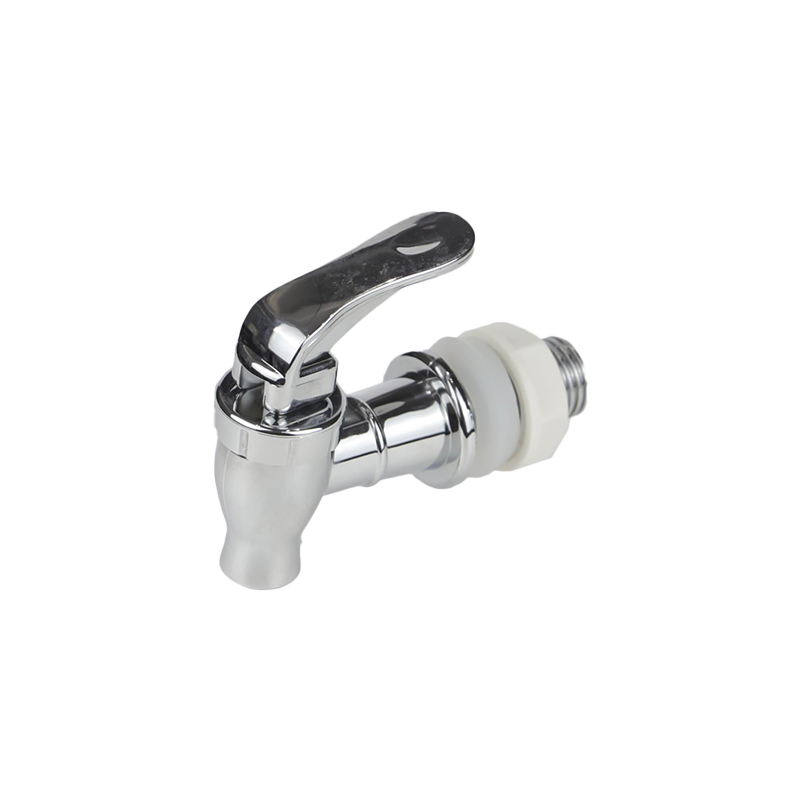
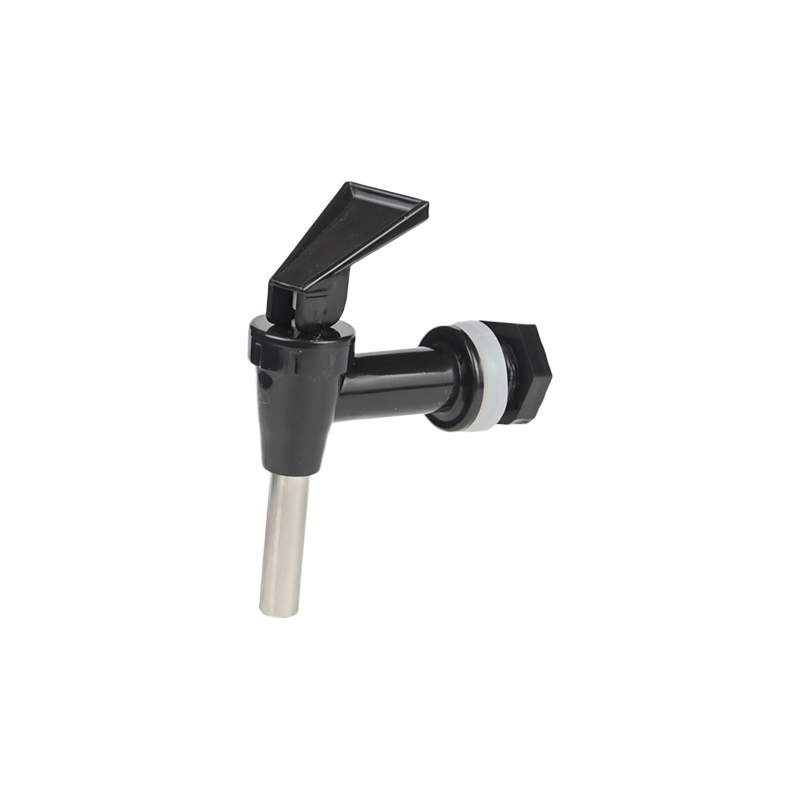
A spigot is the valve assembly that opens and closes the water path at the point of use. In plumbing terminology, "faucet" describes the whole fixture, while "spigot" typically refers to the exterior hose-bib style valve mounted on a wall, post, or yard line. The metal body houses the stem, washer or ball valve, and threaded outlet, and it is this body that takes the mechanical stress of daily on and off cycling.
Two design factors decide how long a spigot or faucet lasts once installed: the valve mechanism and the wall thickness of the cast or forged metal body. Thin-walled zinc castings crack at the inlet threads within two to three seasons of freeze-thaw cycling, while forged brass bodies with 3mm-plus wall thickness routinely pass the 15-year mark with only washer or cartridge replacements. On the indoor side, the internal cartridge or disc handles thousands of open-close cycles per year, so its wear rate is often a better predictor of failure than the visible metal body around it.
Manufacturers typically describe spigot and faucet quality using three specifications: body wall thickness in millimeters, valve cycle rating (the number of open-close cycles the internal mechanism is designed to withstand before performance drops), and maximum working pressure in PSI or bar. Buyers comparing two similar-looking fixtures side by side will usually find the real difference sits in these three numbers rather than in the visible finish.
Indoor Faucet Types: Kitchen and Bathroom Configurations
While outdoor spigots dominate the yard and utility category, "water faucet" as a search term covers a much wider range of indoor fixtures. Understanding the main configurations helps buyers match a faucet to the sink or wall it needs to fit.
- Single-handle faucets — one lever controls both flow and temperature through a ball, cartridge, or ceramic disc valve; the most common configuration in modern kitchens.
- Double-handle (widespread or centerset) faucets — separate hot and cold controls, traditionally compression valves, though most current models use individual ceramic cartridges for smoother quarter-turn operation.
- Pull-down and pull-out kitchen faucets — a flexible hose lets the spray head extend toward the sink basin, useful for washing large pots and produce.
- Wall-mounted faucets — the spout and handles mount directly to the wall above the sink rather than through deck holes, leaving the countertop clear.
- Touchless and sensor faucets — an infrared sensor activates the valve, reducing surface contact in kitchens and commercial washrooms.
Each configuration can be paired with any of the valve mechanisms described in the next section, so the handle style and the internal valve should be evaluated as two separate purchasing decisions rather than one.
Valve Mechanisms Explained: Compression, Ball, Cartridge, and Ceramic Disc
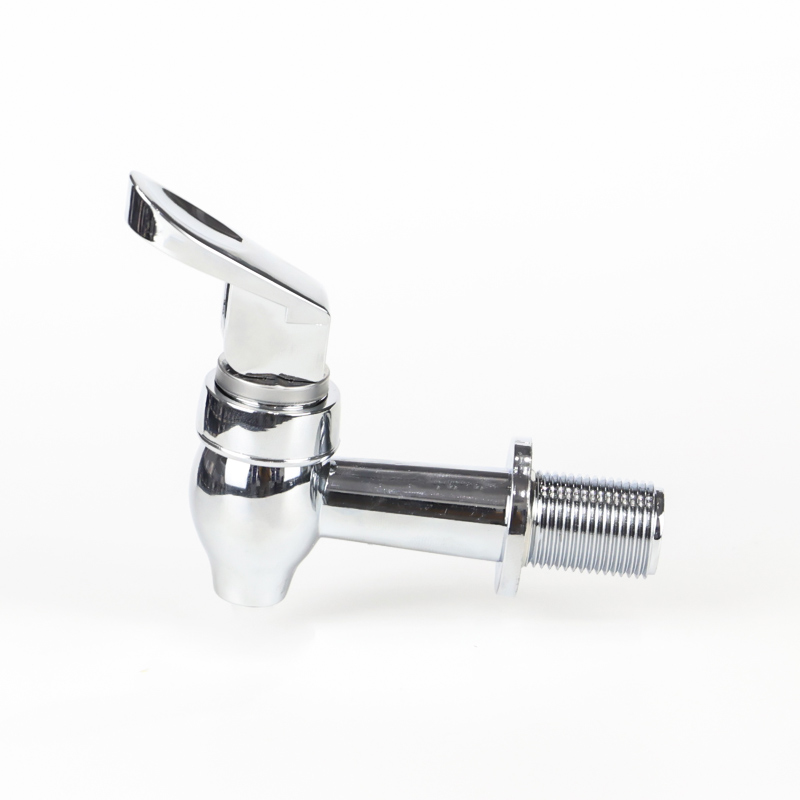
The internal valve mechanism is the single biggest predictor of how often a faucet will need repair. Four designs cover the overwhelming majority of faucets sold today:
| Valve Type | How It Operates | Typical Lifespan | Leak Tendency |
|---|---|---|---|
| Compression | Multi-turn stem presses a rubber washer against a valve seat | 5 to 10 years before washer wear | Highest; washer hardens and drips over time |
| Ball | Rotating metal ball with holes aligns to control flow and mix | 10 to 15 years | Moderate; springs and O-rings wear with heavy use |
| Cartridge | A sealed cylinder with internal channels directs flow and temperature | 10 to 20 years | Low; whole cartridge swaps out as one piece when worn |
| Ceramic disc | Two polished ceramic discs rotate against each other in a quarter turn | 20 to 30 years | Lowest; resists mineral buildup and wear |
A quick way to identify which valve a faucet already uses without opening the body: if the handle rotates through several full turns before shutting off, it is almost certainly a compression valve; if a quarter or half turn fully stops the flow, the fixture uses a ball, cartridge, or ceramic disc mechanism. Ceramic disc valves generally hold up the longest under repeated daily use because the polished disc surfaces resist both mechanical wear and mineral scale far better than a compressible rubber washer.
Common Outdoor Spigot Styles by Application
Outdoor and utility water points fall into a handful of recognizable categories, each suited to a different climate and pressure situation:
- Frost-free sillcock — the actual shutoff sits 6 to 14 inches inside the heated wall cavity, so the exposed spigot never holds standing water through winter.
- Standard hose bibb — the shutoff is at the exterior wall face; simple and low-cost, but must be drained before frost.
- Quarter-turn ball valve spigot — a single 90-degree turn fully opens or closes the line, reducing wear compared with multi-turn compression washers.
- Wheel-handle spigot — common on agricultural and industrial yard lines where gloved hands need a larger grip surface.
- Yard hydrant (post hydrant) — a freestanding unit for irrigation lines set well below the frost line, used across farms and large landscapes.
- Wall-mounted utility spigot with hose reel or timer attachment — increasingly common for automated garden watering setups.
Thread sizing is another practical detail buyers overlook. Most residential outdoor spigots use a standard three-quarter inch hose thread outlet, while agricultural and industrial yard hydrants more often step up to one inch inlets to support higher irrigation flow volumes without a noticeable pressure drop across long supply runs.
Material Comparison: Brass, Stainless Steel, and Zinc
Material choice affects corrosion resistance, weight, price, and repairability more than any other spec. The table below summarizes how the three most common spigot materials compare under normal outdoor conditions.
| Material | Typical Service Life | Corrosion Resistance | Best Fit |
|---|---|---|---|
| Solid brass (H59/H62 grade) | 20 to 30+ years | Very high; naturally corrosion resistant | High-traffic gardens, hose-heavy use, general residential |
| 304/316 stainless steel | 25 to 50 years | Excellent, including salt exposure | Coastal properties, commercial and food-service settings |
| Zinc alloy | 2 to 5 years | Low; prone to pitting once plating wears | Temporary installations, low-budget replacements |
Brass itself is an alloy of mostly copper and zinc, typically 50 to 63 percent copper with the balance in zinc and small amounts of other elements added for machinability. The copper content is what gives brass its natural corrosion resistance and antimicrobial surface properties, while the zinc content adds hardness. Stainless steel spigots rely on a different mechanism entirely: the chromium content, generally around 18 percent in 304-grade steel, forms a thin passive oxide layer on the surface that continuously protects the metal underneath, which is why scratched stainless steel can still resist rust where scratched plated brass cannot.
A frequent buying mistake is mistaking a thin brass-plated zinc casting for solid brass. Genuine solid brass spigots are noticeably heavier for their size, and a magnet will not stick to real brass, while it may show partial attraction on some plated zinc parts due to the base alloy underneath. Holding two visually identical spigots side by side and comparing weight is one of the fastest field tests available before installation.
Finish Options and How They Affect Long-Term Appearance
The visible finish sits on top of the base metal and protects it from surface oxidation, fingerprints, and mineral deposits, but the coating method matters as much as the color. Chrome plating remains the most widely used finish because of its resistance to scratching and ease of cleaning. Brushed nickel hides water spots better than polished chrome and has become a standard mid-range choice. Matte black finishes have grown quickly in popularity, though they show fingerprints and hard-water residue more visibly and need more frequent wiping to stay looking clean.
Physical vapor deposition, commonly abbreviated PVD, has become the preferred coating process for finishes that need to hold up in hard-water regions or high-humidity outdoor settings. A PVD-coated finish bonds at a molecular level to the base metal, which makes it considerably more resistant to peeling, fading, and pitting than a sprayed or standard electroplated coating. Buyers sourcing at scale should ask specifically whether a finish is PVD-applied, since this single detail is often the difference between a finish that holds its color for a decade and one that shows wear within the first year.
Flow Rate and Water Pressure Considerations
Flow rate, measured in gallons per minute or GPM, determines how quickly a faucet fills a sink or connects to garden equipment, while water pressure determines how forcefully that flow arrives. Most modern faucets across bathroom and kitchen categories cluster around 1.2 GPM, with some efficiency-focused touchless models running as low as 0.5 GPM and higher-flow kitchen and utility spigots reaching 1.5 GPM or more.
For outdoor spigots and yard hydrants feeding irrigation lines or pressure washers, the relevant spec shifts from GPM to maximum working pressure, typically expressed in PSI. Solid brass bodies handle sustained pressures above 100 PSI reliably, while thin zinc castings are more prone to stress cracking at the inlet threads under the same load. Buyers supplying agricultural or industrial customers should confirm a spigot's rated working pressure against the actual line pressure at the installation site rather than assuming a standard residential-grade fixture will hold up under higher-volume use.
How to Match a Spigot or Faucet to Your Property's Conditions
The right spigot depends on practical factors rather than aesthetics alone:
- Winter exposure — properties that see temperatures below 32°F (0°C) need a frost-free sillcock or a spigot that can be fully drained before the first freeze.
- Water pressure — solid brass bodies handle sustained pressures above 100 PSI more reliably than zinc, which is more prone to stress cracking at the inlet threads.
- Usage frequency — daily hose connection and disconnection wears threads faster, favoring a heavier wall thickness and a full-port ball valve over a compression washer design.
- Water hardness — regions with high mineral content benefit from ceramic disc or cartridge valves, which resist scale buildup better than traditional washers.
For coastal properties within roughly five miles of open water, salt air will pit lower-grade plated finishes within a single season; 316 stainless steel or marine-grade brass is the more cost-effective choice over the fixture's lifetime, even at a higher upfront price.
Installation and Placement Considerations
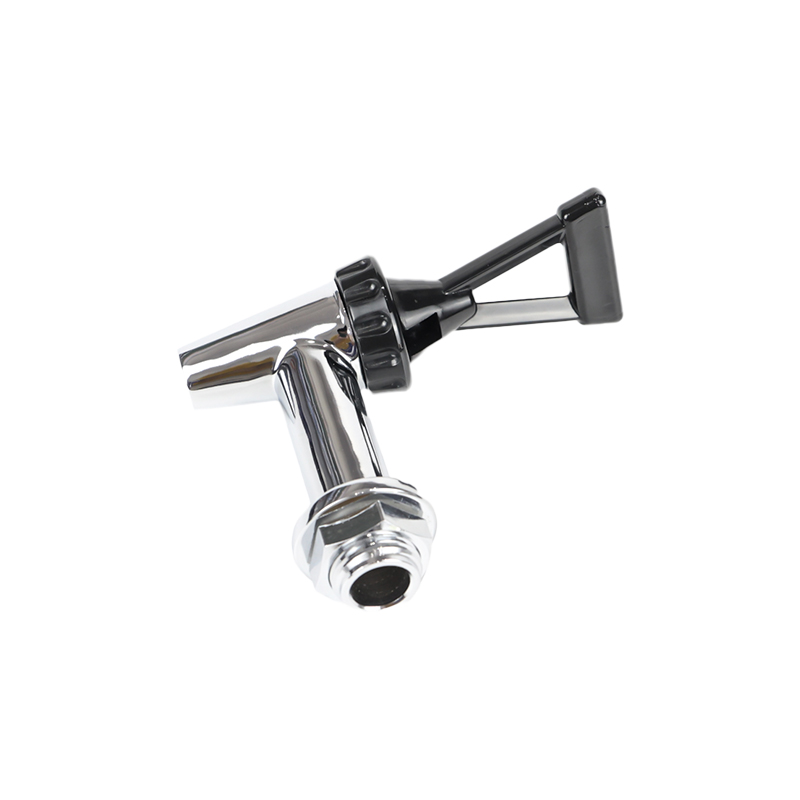
Correct placement prevents the majority of premature spigot failures. Mounting height should clear typical hose-reel and bucket use, generally 18 to 24 inches above grade for residential yards. The spigot should angle slightly downward from the wall so residual water drains out rather than pooling at the valve seat, which accelerates internal corrosion in any material.
For post hydrants and yard lines, the buried supply line must sit below the local frost line — often 24 to 48 inches deep depending on regional climate data — so the shutoff point never freezes even if the above-ground spigot does. Indoor faucet installation, by contrast, centers on matching the fixture's base configuration to the sink's pre-drilled holes: single-hole, centerset with holes 4 inches apart, or widespread with holes spaced 8 inches or more apart. Buying a faucet before confirming this measurement is one of the most common and avoidable installation delays.
Freeze Protection and Seasonal Shutdown Steps
Even a well-built spigot fails if it is never drained ahead of winter. A simple seasonal routine prevents the majority of freeze-related cracks:
- Shut off the interior supply valve feeding the spigot before the first hard freeze.
- Open the exterior spigot fully to let any remaining water drain and to relieve pressure in the line.
- Disconnect and store any attached hose, since a connected hose traps water against the spigot outlet and defeats frost-free designs.
- Insulate exposed sections of pipe in unheated crawl spaces with foam sleeves for extra protection in unusually cold snaps.
- Check the spigot again after the first thaw for hairline cracks that may not leak visibly until the line is repressurized.
Maintenance That Extends Service Life
Most spigot failures trace back to a worn rubber washer rather than the metal body itself. Replacing the washer every three to five years, before it hardens and starts dripping, protects the valve seat from the erosion that a constant drip causes over time. A light coating of plumber's grease on the stem threads once a year keeps quarter-turn valves moving smoothly and reduces the force needed to operate them, which in turn reduces stress on the body casting.
For hard-water regions, an annual soak of the outlet threads in a mild descaling solution prevents mineral buildup from binding the connection, a common reason hose fittings appear to seize even on otherwise sound brass bodies. Ceramic disc and cartridge valves need far less routine attention, but when they do eventually leak, the entire cartridge is typically swapped as a single sealed unit rather than repaired piece by piece, which keeps the repair straightforward even for less experienced installers.
What to Expect on Cost
Price scales closely with material and valve type. A basic zinc-bodied compression spigot sits at the low end of the market, while a frost-free brass sillcock with a ball or cartridge valve commands a moderate premium justified by its much longer service life. Stainless steel spigots and marine-grade brass fixtures for coastal or commercial installations typically represent the highest price tier in the category, reflecting both raw material cost and the more demanding manufacturing process needed to hold precise tolerances in a harder metal.
For buyers evaluating cost on a per-year-of-service basis rather than sticker price alone, a solid brass spigot priced two to three times higher than a zinc equivalent still costs less annually once the zinc unit's shorter two-to-five-year lifespan is factored against brass routinely lasting 20 years or more.
Sourcing Considerations for Wholesale and Bulk Buyers
Buyers purchasing spigots and faucets at volume for distribution, hospitality projects, or private-label programs face a different set of questions than a single homeowner. Confirming wall thickness with calipers rather than relying on catalog descriptions alone helps avoid receiving a lighter-gauge casting than expected. Requesting a sample unit for a magnet and weight check before committing to a full production run remains standard practice, since visual photographs alone cannot reliably distinguish solid brass from plated zinc.
Consistency between production batches is another practical concern: alloy composition can drift slightly between supplier runs, which affects both corrosion resistance and finish adhesion. Buyers working with a manufacturing partner over multiple orders benefit from requesting the same alloy specification and finish process on every batch rather than accepting minor substitutions that may only become apparent after installation in the field.
Buying Mistakes That Shorten a Spigot's Lifespan
A handful of avoidable errors account for most early replacements:
- Choosing a decorative finish over wall thickness — a thin, attractive casting will still crack under the same stress a plain utilitarian spigot handles easily.
- Leaving a hose connected through winter, which traps water at the valve even on frost-free models.
- Overtightening hose connections, which stresses the outlet threads and is a leading cause of hairline cracks in zinc bodies specifically.
- Ignoring a slow drip, which erodes the valve seat and turns a five-minute washer swap into a full spigot replacement.
- Buying by finish photo alone for bulk orders without confirming wall thickness or alloy grade with a physical sample first.
Frequently Asked Questions
What is the difference between a faucet and a spigot?
"Faucet" is the general term for any water fixture with a valve, while "spigot" more specifically describes an outdoor or utility hose-bib style valve. In everyday use the terms overlap, but spigot usually implies an exterior, hose-connectable fitting.
How do I know if my outdoor spigot is brass or zinc?
Genuine solid brass feels noticeably heavier for its size and will not attract a magnet at all, while brass-plated zinc often shows a faint magnetic pull where the plating has worn thin. Weight and a simple magnet test are the two fastest checks before buying or replacing a unit.
Do I need a frost-free spigot if I already drain the line every winter?
Draining the line manually can substitute for a frost-free design, but it depends on remembering to do it before every hard freeze. A frost-free sillcock removes that dependency because its shutoff point sits inside the heated wall regardless of whether the exterior section has been drained.
How often should the washer or cartridge be replaced?
A compression washer typically needs replacement every three to five years, or sooner if the spigot starts to drip after being fully closed. Ceramic disc and cartridge valves last considerably longer, often 15 to 20 years, and are swapped as a single sealed unit when they eventually wear out.
Is stainless steel worth the extra cost over brass for a standard backyard?
For most inland residential yards, solid brass already delivers 20 or more years of service at a lower price point, so the extra cost of stainless steel is best reserved for coastal properties or commercial sites with high salt or chemical exposure.
Which valve type is best for a busy household kitchen?
A ceramic disc or cartridge valve is generally the better fit for a high-use kitchen faucet, since both resist the daily cycling and mineral scale exposure that wear down a compression washer far more quickly.
What thread size do most outdoor spigots use?
Most residential outdoor spigots use a standard three-quarter inch hose thread outlet, matching common garden hose fittings, while larger agricultural yard hydrants often step up to one inch inlets to support higher irrigation flow.
Can a spigot be repaired instead of replaced?
In most cases yes. Washers, O-rings, and cartridges are individually replaceable parts, so unless the metal body itself has cracked from freeze damage or corrosion, a worn spigot can usually be restored to full working condition with a simple internal part swap.