
 English
 русский
 日本語
日本語 عربى
عربى Español
Content
- 1 Faucet Corrosion: The Direct Answer First
- 2 Why Faucets Corrode: Four Mechanisms That Work Together
- 3 Why Dispenser Spigots and Drinking-Water Taps Corrode Differently
- 4 Material by Material: What Corrodes, What Does Not, and Why
- 5 How to Identify the Corrosion Type in Three Minutes
- 6 A Cleaning Sequence That Removes Corrosion Without Increasing It
- 7 Prevention Rules We Apply as a Tap Manufacturer
- 8 Repair or Replace: When Corrosion Has Gone Too Far
- 9 Buying Guide: Four Checks for a Corrosion-Resistant Faucet
- 10 FAQ: Faucet Corrosion Questions We Hear Most Often
- 10.1 Can faucet corrosion make drinking water unsafe?
- 10.2 My stainless steel spigot shows orange spots. Is it rusting?
- 10.3 Does vinegar damage chrome plating?
- 10.4 Why does green corrosion come back after cleaning?
- 10.5 How long does a faucet last in a hard-water area?
- 10.6 Should I choose plastic or metal for a water dispenser tap?
Faucet Corrosion: The Direct Answer First
Eight months after a chrome-plated spigot is installed on a glass beverage dispenser, the outlet ring develops green spots and a white crust forms around the valve stem. The most common reaction is to blame the faucet. A quick check changes the diagnosis: the same white crust appears on the nearby glass surface, while the green stains show up only on the metal. Faucet corrosion is rarely a manufacturing defect. It is the predictable outcome of water chemistry working against an unprotected metal surface.
Corrosion on a faucet is the visible result of two related but distinct processes. Mineral scale is a deposit of calcium and magnesium carbonates that forms when hard water evaporates. Metallic corrosion is the oxidation of the base metal, which begins either because the protective plating has failed or because chlorides and acids attack the metal directly. The two processes feed each other: scale keeps the metal wet and traps chlorides, and trapped chlorides penetrate the plating and start pitting. According to the U.S. Geological Survey, water with total hardness above 120 milligrams per litre as calcium carbonate is classified as hard, and above 180 milligrams per litre as very hard. In a hard-water area, scale forms on any fixture that dries off between uses, including water dispenser taps that are opened dozens of times a day.
The treatment depends on the symptom, so the first step is to read the deposit correctly. The table below maps the stains and crusts found on faucets to the mechanism behind each of them.
| What you see | What it actually is | Most likely cause | Where it appears |
|---|---|---|---|
| White chalky crust | Calcium and magnesium carbonate scale | Hard water evaporating repeatedly | Outlet, aerator, gasket edges |
| White or grey powder on plating | Zinc oxide from a zinc alloy body | Galvanic corrosion under damaged plating | Base of spout, threaded collar, handle joints |
| Blue-green spots | Copper salts from a brass or copper core | Plating penetrated, copper exposed to moisture | Spout base, handle joints, edge of trim rings |
| Orange-brown deposit | Iron rust or transferred iron particles | Steel tool debris, rusted pipe fragments, low-grade steel | Threads, filter housings, stainless spigot surfaces |
| Black marks | Sulphide tarnish or mould growth on rubber | Dampness, sulphur in water, organic film on seals | Under the aerator, behind handles, rubber gaskets |
Why Faucets Corrode: Four Mechanisms That Work Together
Every corrosion case seen on a workshop bench, whether a bathroom faucet or a dispenser spigot, belongs to one of four groups. Understanding which group your faucet is in explains both the stain you see and the cleaning method that is safe to use.
Hard Water and Mineral Scale Formation
Hard water is the leading cause of the white crust that people call corrosion. The water carries dissolved calcium and magnesium bicarbonates. When a drop evaporates, the bicarbonates convert to insoluble carbonates. Each wet-dry cycle leaves a thin layer, and a faucet used ten or twenty times a day accumulates visible scale in a few months. According to the U.S. Geological Survey, water hardness above 120 mg/L as calcium carbonate is classified as hard; many regional water supplies deliver 180 mg/L or more.
Scale does not chemically attack the metal at first. Its danger is that it creates a permanently damp, chloride-rich micro-environment underneath. Once that happens, the base metal begins to pit. On a chrome-plated faucet, the first visible sign of this sequence is usually a rough white ring around the outlet: scale on the surface, with corrosion starting hidden beneath it.
Hot water accelerates carbonate precipitation. When the water temperature rises above roughly 60 degrees Celsius, the carbonate equilibrium shifts toward the solid phase. This is why the hot-side valve of a water dispenser scales faster than the cold-side valve, even though both handle the same water.
Galvanic Corrosion Between Dissimilar Metals
Galvanic corrosion requires three elements: two metals with different electrical potentials and an electrolyte connecting them. Tap water is a weak electrolyte, and it is sufficient. The metal higher in the galvanic series becomes the anode and corrodes preferentially. A plumbing fixture accidentally builds this cell in several places: a chrome-plated zinc alloy body connected to a brass threaded insert, a stainless steel spring seated in a brass valve body, or a copper tube connected to a zinc-coated bracket. As long as plating isolates the metals, no current flows. The first scratch opens the circuit, and corrosion begins at that scratch.
Zinc is anodic to brass, copper, and nickel, so the zinc alloy body corrodes first, producing a loose white powder of zinc oxide. This is why a scratched chrome-zinc faucet shows a white bloom that returns one day after cleaning: the galvanic cell is still active, and the cleaning only removed the oxide, not the contact. The lasting fix is isolation, which means replacing the part or adding a dielectric washer between the dissimilar metals, the same logic used in residential plumbing between galvanized steel and copper pipes.
Chemical Cleaners That Remove the Protective Layer
More plated faucets fail from the cleaning cabinet than from the water. Hydrochloric acid descalers, oxalic acid powders, abrasive scouring pads, and chlorine-bleach bathroom sprays all remove or etch plating. Decorative chrome plating on plumbing fixtures is thin by design: the chrome layer is typically between 0.2 and 0.5 micrometres, with a nickel layer of 15 to 30 micrometres beneath it in ordinary industry practice. The nickel provides the corrosion resistance and is responsible for the warm grey colour. Once the chrome is scratched or etched, the nickel is exposed; once the nickel layer is penetrated, the base metal corrodes with no protection.
The practical rule is simple. On plated surfaces, use neutral pH cleaners only. Never mix an acid cleaner with a chlorine bleach cleaner, because the mixture releases toxic gas, and even separately they accelerate plating loss. Never soak chrome parts in undiluted white vinegar for hours; a short ten-minute contact removes scale, while an overnight soak can etch the nickel layer.
The Micro-Environment Around the Faucet
The surrounding air and water define the actual corrosion load. A bathroom faucet lives in a humid environment with soap residues and cleaning vapours. A drinking water tap lives in a different environment: water with residual chlorine, frequent hot-cold cycling, and in commercial use the residues of juice, coffee, and syrup. WHO guidance on chlorination indicates that a free chlorine residual of roughly 0.2 to 1 mg/L is typically maintained through distribution networks, and that residual is enough to make chloride-driven pitting possible on stainless steel. Chloride ions attack the passive oxide film on stainless steel and cause pits at threads, crevices, and scratches. Sugar and juice films make the situation worse: an organic film prevents oxygen from reaching the metal surface, so a local oxygen concentration cell forms under the film, and corrosion proceeds underneath it. For beverage spigots used in cafes and canteens, this is the mechanism to plan for.
Why Dispenser Spigots and Drinking-Water Taps Corrode Differently
A bathroom faucet opens for twenty to thirty seconds, several times a day. A water dispenser spigot in an office or commercial kitchen opens more often, drips more often, and handles a temperature range that a bathroom fixture never sees. The same water chemistry therefore produces a different corrosion pattern on dispenser taps, and the differences map to three factors.
- Drip evaporation concentrates minerals at the outlet. A slow-dripping spigot leaves a drop that evaporates on the valve seat and outlet. Over months, calcium carbonate gradually closes the opening, and the rough scale holds every future drop against the metal. On dispenser taps, the outlet becomes the first place to corrode even when the rest of the tap looks clean.
- Thermal cycling opens hairline cracks in scale and seals. Dispenser hot water reaches 85 to 95 degrees Celsius, and the same tap also handles chilled water. The body and the valve seat expand and contract through a much wider range than a bathroom faucet. Scale is rigid and brittle: it cracks under thermal movement, fresh metal is exposed along the crack, and the cycle starts again on bare metal.
- Organic films from beverages create under-deposit corrosion. Beverage spigots used with juice, syrup, or coffee form a sugar-protein film on internal surfaces. This film starves the metal surface of oxygen, and acidic components in the drink concentrate under the film. The result is localized pitting exactly beneath the stain, the green or dark spots seen on spigot outlets in food service.
Because of these conditions, the water path of a well-designed drinking water tap is deliberately non-metallic. Injection-moulded polypropylene (PP) or acetal (POM) carries the water, and the metallic elements are limited to the spring and the valve stem. The visible metal edge, often the outlet, is the only metallic part that remains in the evaporation zone. That is why, on dispenser taps, corrosion appears as a narrow ring at the outlet rather than as widespread surface staining.
The construction and valve style also shape the failure pattern. A switch from a conventional rotary tap to a lever-operated or push-valve design changes the number of seals and crevices in the flow path, so the maintenance chore changes accordingly. Before choosing a spigot for a dispenser, it is worth checking the four types of water dispenser faucet and how each one behaves under hard-water service.
Material by Material: What Corrodes, What Does Not, and Why
For a buyer, the material table is the real specification. The same barrel shape can be made from chrome-plated zinc alloy, solid brass, 304 stainless steel, or food-grade plastic. The corrosion behaviour differs by an order of magnitude.
| Material | Where it is used | Corrosion behaviour | Practical note |
|---|---|---|---|
| 304 stainless steel | Metal spigots, beverage dispenser taps, valve stems | Self-healing chromium oxide film; pits under chloride attack only at crevices and scratches | First choice for drinking water contact |
| Chrome-plated zinc alloy | Budget faucets, plated dispenser trims, handles | White zinc oxide forms as soon as plating is scratched; galvanic cell with brass parts | Avoid in the water path |
| Chrome-plated brass | Mid-range bathroom and kitchen faucets | Green copper salts and dezincification when plating fails; long life if plating stays intact | Good, but plating quality decides service life |
| Food-grade polypropylene (PP) | Water dispenser taps, bottle spigots, valve bodies | No metallic corrosion; scale and hot-water stress cracking are the only concerns | Safest option for drinking water parts |
| POM (acetal) | Valve seats, stems, inserts | No rust, no galvanic corrosion; slight swelling in highly chlorinated water | Reliable for seats and moving parts |
| Copper and brass pipes | Supply lines and internal channels | Patina (green oxide) and dezincification; copper ions can enter standing water | Plumbing standard, but protect the water path in drinking fixtures |
304 Stainless Steel: The Self-Healing Option
Type 304 stainless steel contains approximately 18 percent chromium and 8 percent nickel, which is why it is also known as 18/8 steel. The chromium reacts with oxygen to form a chromium oxide film a few atomic layers thick. The film repairs itself almost instantly after a scratch, and this self-healing property is what makes 304 the most predictable metal for drinking water contact. The known weakness is chloride pitting: if a scratch is kept permanently wet in chlorinated water, a pit can start and then grow faster because the interior of the pit is deoxygenated. In practice, this happens at threads and crevices where water stagnates, rather than on the visible surface.
Before buying, weigh the advantages and disadvantages of 304 stainless steel faucets. For beverage and mini keg dispensing, the stainless steel tap dispenser keeps the entire flow path free of plating that can peel, which is the most common failure mode on plated fixtures in commercial use.
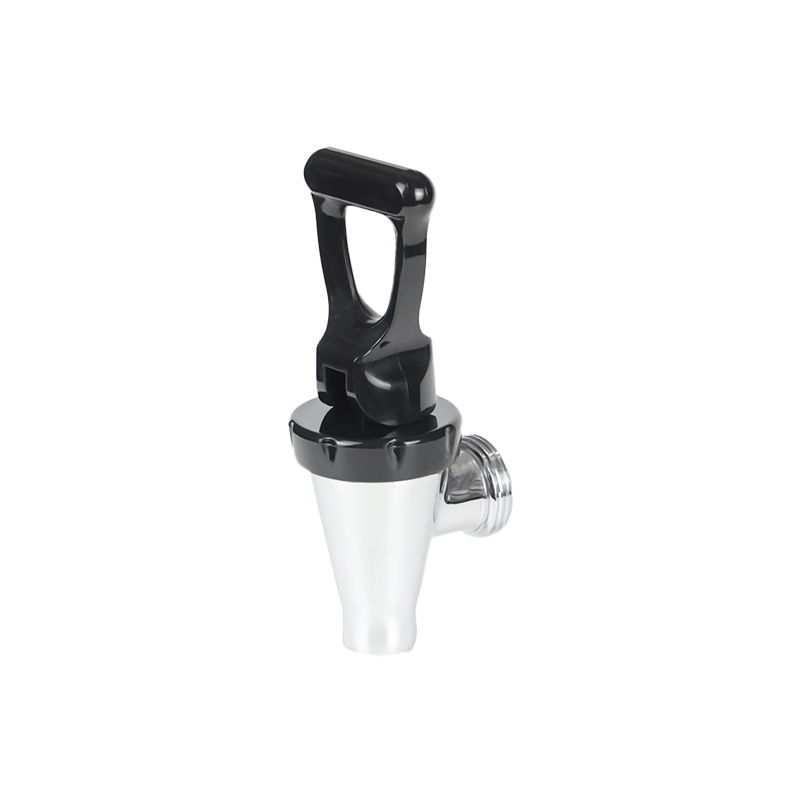 Custom Wholesale Stainless steel tap dispenser Suppliers, CompanyBoda Electrical Appliances Co.,Ltd is famous China Stainless steel tap dispenser suppliers, we custom and wholesale worldwide. Great f...View Product →
Chrome-Plated Zinc Alloy: The Least Predictable
Zinc alloy, often abbreviated as zamak, is used because it casts easily and takes a bright chrome finish. Its corrosion behaviour is the worst of the common faucet materials: zinc is anodic to brass, copper, nickel, and stainless steel. Once the chrome layer is scratched, the exposed zinc corrodes rapidly and forms a voluminous white oxide. On a plated faucet, this appears as a white powder that returns within days of cleaning. The corrosion is also progressive, because it lifts the remaining plating from underneath and the damaged area spreads. For drinking water equipment, plated zinc alloy should not be used in any part that touches the water.
Food-Grade Plastics: The Practical Default for Dispensers
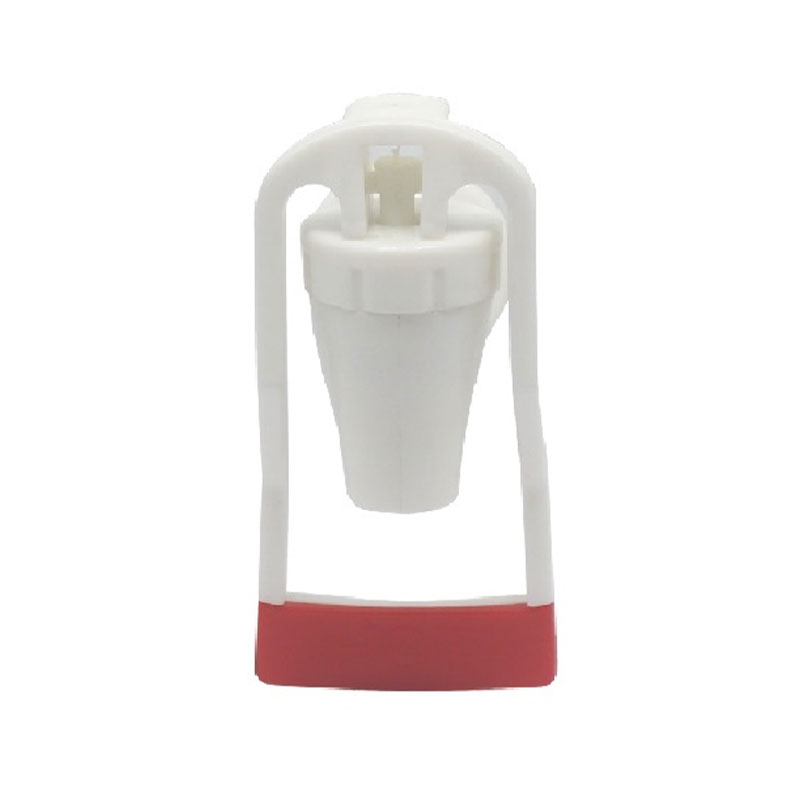
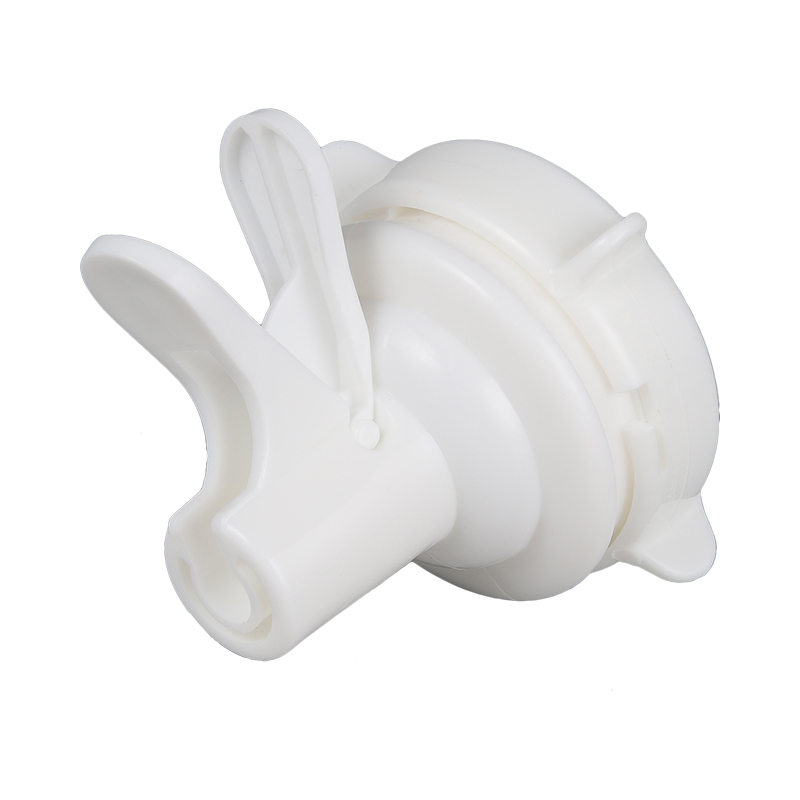
Polypropylene (PP) and acetal (POM) have no oxidation mechanism and no galvanic potential against water; they simply do not corrode in the electrochemical sense. This is why most drinking water taps in the market use PP for the body: it eliminates rust, green stains, and metal-ion release. The trade-offs are mechanical. PP softens and creeps at sustained high temperatures, so the hot-side water path must be designed with wall thickness and thermal stabilizers in mind. Scale can also build up inside a plastic valve seat, which is why the spring and the seal, not the plastic body, are normally the first parts to need maintenance. A plastic-bodied water dispenser faucet, backed by a stainless steel stem, is the configuration that best combines corrosion resistance with mechanical life.
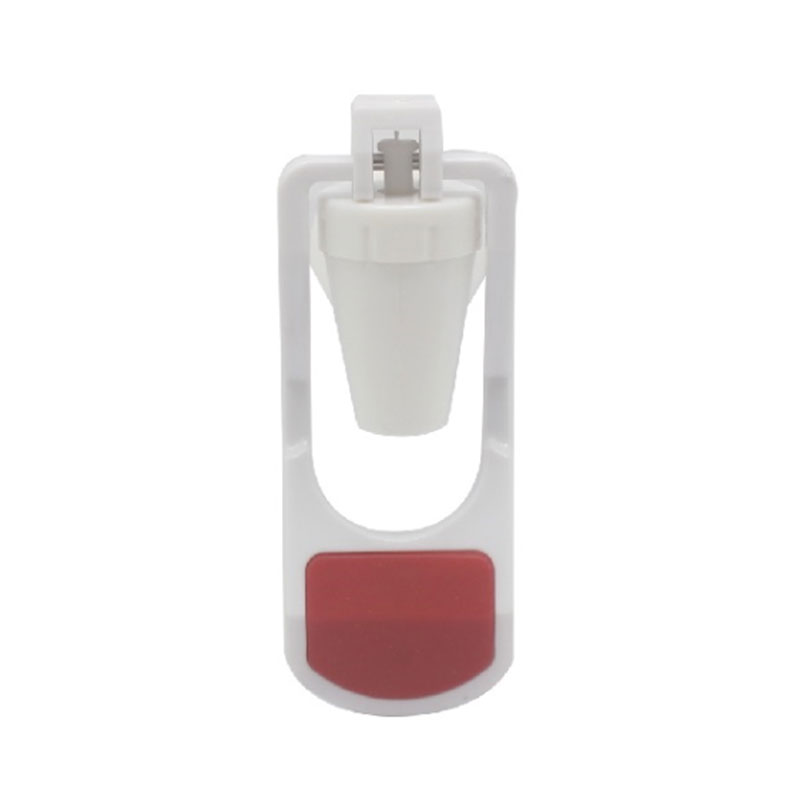 Custom Wholesale Water dispenser faucet Suppliers, CompanyBoda Electrical Appliances Co.,Ltd is famous China Water dispenser faucet suppliers, we custom and wholesale worldwide. Applicability: wa...View Product →
Electroplated Finishes: Appearance That Depends on Plating Discipline
Electroplated nickel-chrome finishes are used on dispenser taps when the look of polished metal is required. The quality is not defined by colour but by three things: nickel thickness, adhesion, and coverage at corners and threads. Plating that is thick at the centre of a barrel but thin at the collar will fail first at the collar, because the deposition current thins on convex edges. Buyers who need the plated look should inspect the parts that touch water and replace the cartridge if the plating shows hairline cracks. For taps that combine a plated exterior with a water path, such as an electroplated water valve tap for drink dispensers, the internal valve cartridge and the external plating have two different service lives, so plan to replace the cartridge at regular intervals while the exterior still looks new.
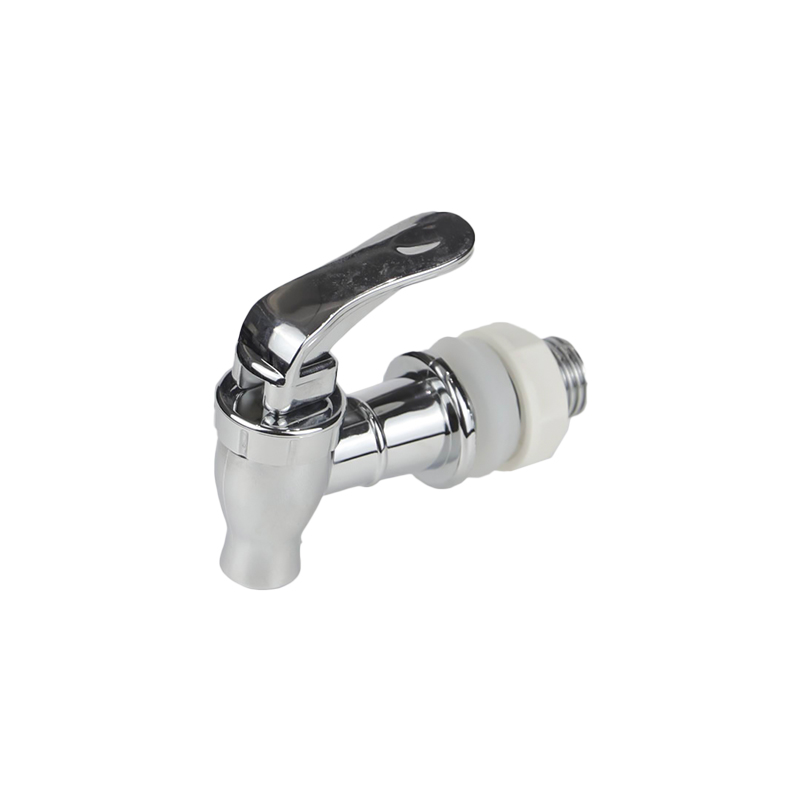 Custom Wholesale Water valve tap faucet for drink dispenser-t9-1 Suppliers, CompBoda Electrical Appliances Co.,Ltd is famous China Water valve tap faucet for drink dispenser-t9-1 suppliers, we custom and wholesale wor...View Product →
How to Identify the Corrosion Type in Three Minutes
You do not need a laboratory to tell scale from corrosion. A drop of vinegar and a clean cloth are enough for most cases.
- Drop white vinegar on the deposit. If it fizzes within a few seconds, the deposit is calcium carbonate scale. It is a mineral layer, not a metal loss, and cleaning will restore the surface.
- If there is no fizz, wipe the surface with a dry cloth. A residue that powders away and exposes shiny metal beneath is surface scale or oxidation. A residue that leaves a pitted, rough surface indicates metal loss, meaning the protective layer is gone.
- Green or blue-green stains on any chrome-nickel-plated part mean the copper or brass layer is exposed and is forming copper salts. The green colour comes from the metal, not from the water.
- Orange-brown dust on a stainless steel spigot is often iron that came from somewhere else, such as a steel scouring pad, rust flakes from an upstream pipe, or a steel brush. It can be cleaned off without lasting damage. If the metal itself is reddish and rough underneath, the steel grade is suspect.
- Black, greasy spots along rubber seals are usually mould growth or sulphide tarnish, not metallic corrosion. Replace the seal with a fresh food-grade silicone gasket rather than polishing it.
One warning applies to all tests: never scratch the surface to see what is underneath. A scratch in chrome plating instantly creates the galvanic cell described in the previous section, turning a cosmetic problem into a corrosion problem. Use a soft cloth and your eyes.
A Cleaning Sequence That Removes Corrosion Without Increasing It
Cleaning is the step where most corrosion accelerates. The aim is to remove deposits and restore a dry surface, not to polish away the plating. The following sequence works for plated metal, stainless steel, and plastic-bodied taps.
- Confirm the material and the deposit type using the three-minute test above. Never skip this step; an acid descaler that removes scale from one material can etch a different surface.
- For calcium scale on chrome or nickel surfaces, prepare a solution of one part white vinegar to three parts warm water, or 20 grams of citric acid per litre of water. Wrap a cloth soaked in the solution around the affected area and leave it for 10 minutes. For stainless steel, the contact time can be extended to 20 minutes; for chrome plating, respect the 10-minute limit to protect the thin chrome layer.
- For copper stains on brass or chrome, make a paste of citric acid powder and water, apply it to the stain, leave it for 5 minutes, and rinse. The green copper salts dissolve without attacking the nickel layer.
- For iron rust, use a paste of three parts baking soda to one part water, scrub gently with a nylon bristle brush, and rinse. Nylon brushes are softer than the plating and will not create new scratches.
- For scale inside a dispenser tap, remove the outlet or aerator, soak it in the same vinegar solution, and flush the valve with clean water. Never try to scrape scale out of a plastic seat with a metal tool; scale will release from plastic after a soak.
- Rinse everything with clean water, wipe completely dry, and allow the assembly to air for an hour before reattaching. A dry surface is the single most effective corrosion prevention step you can take every day.
For stainless parts, a dedicated guide on how to clean stainless steel faucets provides additional detail on removing fingerprints, film, and hard-water spots without damaging the finish. The same rules apply to stainless spigots on beverage dispensers.
Prevention Rules We Apply as a Tap Manufacturer
As a manufacturer of drinking water taps, spigots, and bottle pumps, we test our parts under hard-water and chlorinated-water conditions, and we see the cleaning habits of thousands of customers. The prevention rules below are the ones that reliably keep a faucet free of corrosion for years.
- Break the wet-dry cycle. Wipe the outlet and the base of the faucet after the last use of the day. Corrosion needs a persistent film of moisture; a dry surface cannot corrode. This simple habit reduces the formation of carbonate scale by the largest margin of any maintenance step.
- Treat the water if the hardness exceeds 120 mg/L. A water softener or an ion-exchange filter on the supply line cuts the calcium and magnesium load before it reaches the faucet. This single investment prevents scale at the source, not only on the faucet but also in the water heater and inside dispenser tanks.
- Do not use acid descalers more than twice a year. Scale that builds up over months can be removed with a 10-minute citric acid rinse. Weaker, more frequent cleaning beats strong occasional descaling, and it protects the plating.
- Check the gaskets and seals every six to twelve months. A swollen or cracked silicone seal creates a damp crevice, and every damp crevice is a future corrosion site on the metal parts around it. Replacement seals are inexpensive; the corrosion they prevent is not.
- Use food-grade silicone washers at metal-to-metal connections. Where a metal spigot meets a glass jar or a stainless tank, a silicone washer breaks the galvanic path and prevents the metal-to-metal contact that causes localised ion transfer.
- For commercial beverage spigots, clean the flow path weekly. Juice and syrup residues trigger the under-deposit corrosion mechanism described earlier; flush with warm water and a mild detergent, then rinse thoroughly and dry.
Repair or Replace: When Corrosion Has Gone Too Far
Corrosion is not always a reason to replace a faucet. The decision threshold depends on where the corrosion is and whether it has altered the function.
Repair the Cosmetic Damage
If the surface has white scale, light copper stains, or rust dust that can be removed with the vinegar or baking soda method, the fixture still has its structural life. Clean it, dry it, and monitor the spot for one month. If the stain does not return, the plating is intact and the cause was hard water, not active corrosion.
Replace When Pitting Has Penetrated the Plating
Once you can feel rough pits under your fingernail on a chrome-plated part, the protective layer is breached and the galvanic cell is active. No cleaning product can restore that metal; polish will only remove more of the surrounding plating. For a bathroom faucet, this means replacing the cartridge or the whole faucet. For a drinking water tap, pitting inside the water path means replacing the tap immediately, because pits trap water and bacteria and can release metal ions into the water.
Replace When Any Corrosion Appears in the Drinking Water Path
In drinking water equipment, the rule is stricter than in bathroom plumbing. Scale on the outside of a spigot is a cosmetic issue; scale on the valve seat inside a plastic body may still be cleanable. But green corrosion, rust, or pitting on any metal part in the water path means the part has begun to release corrosion products. The cost of a new plastic-bodied water dispenser faucet is usually a small fraction of the cost of the water and equipment around it, so the economical decision is to replace the tap and inspect the supply line.
Do Not Forget the Hidden Corrosion Cost for Dispensers
A corroded outlet on a beverage spigot is not just an appearance problem. The rough surface holds juice residue, and the residue feeds bacterial growth, which in turn concentrates organic acids under a film. The monthly cost of cleaning chemicals and downtime to a commercial operation quickly exceeds the price of a new spigot. Replacing a valve cartridge every year or two is normal maintenance, not premature failure.
Buying Guide: Four Checks for a Corrosion-Resistant Faucet
Buyers who choose based on material instead of price get a faucet that still looks acceptable after three years. Four checks cover the majority of purchase mistakes.
- Check the water path material. The part that touches water determines corrosion risk. Prioritise 304 stainless steel, PP, or POM in the water path; avoid plated zinc alloy and uncoated brass. If the specification does not state the water path material, ask the supplier for the exact composition.
- Check the plating at the edges, not at the centre. The failure point of any plated part is at threads, collars, and die lines, where the plating is thinnest. Run a fingernail across the edge; a plated edge that catches or flakes will fail within a year.
- Check the seal and seat design. Fewer crevices in the flow path mean fewer places where scale can start. A tap with a smooth, replaceable cartridge seat will be easier to clean and will last much longer than a design with blind internal corners.
- Check the hot-water rating. Dispenser hot water can reach 85 to 95 degrees Celsius. If the body is PP, confirm that the manufacturer rates the body for continuous hot water service, and verify that the silicone seal is suitable for that temperature. A hot-rating mismatch leads to stress cracking well before corrosion appears.
These four checks apply whether the purchase is a kitchen pull-out faucet or a small drinking water spigot for a 5-gallon bottle. The mechanism of corrosion is identical; only the scale and the acceptable cost differ.
FAQ: Faucet Corrosion Questions We Hear Most Often
Can faucet corrosion make drinking water unsafe?
Yes, when corrosion products are released into the water. Green copper salts from a corroded brass part, rust from an iron part, or white zinc oxide from a damaged galvanised part all indicate that metal is dissolving into the water. In a drinking water tap, the rule is to replace the part as soon as corrosion appears inside the flow path. Scale alone is not a health hazard, since it is calcium carbonate, but it provides shelter for microorganisms and should be removed.
My stainless steel spigot shows orange spots. Is it rusting?
Usually not. Most orange spots on 304 stainless steel are iron particles that have transferred onto the surface from a steel scouring pad, steel tools, or rusting pipe fragments upstream. These are surface stains: clean them with a baking soda paste and a nylon brush, then rinse and dry. If the rust reappears in exactly the same pits, the stainless surface itself is damaged, which happens on poorly passivated or aggressively scratched surfaces.
Does vinegar damage chrome plating?
Short exposure, up to 10 minutes, is safe for intact chrome. The chrome layer is chemically resistant to dilute acetic acid. The risk appears when the chrome is already scratched: vinegar reaches the nickel layer and, given hours of contact, causes pitting of the nickel. The rule is to use diluted vinegar at one part to three parts water, keep the contact short, and rinse thoroughly.
Why does green corrosion come back after cleaning?
If green stains return within days, the copper or brass base is still exposed and still wet. Cleaning removed the corrosion product but not the source. Either the plating at that spot is gone, or a galvanic cell is active between the brass core and the surrounding metal. The only lasting fix is to replace the plated part or, for non-water-bearing areas, refinish the surface with a metal primer.
How long does a faucet last in a hard-water area?
With hardness above 120 mg/L and no maintenance, scale becomes visible within three to six months, and cosmetic corrosion can appear within two years on plated parts. With regular wiping, softened water, and neutral cleaners, a 304 stainless steel or PP-bodied tap can remain corrosion-free for five to ten years. In very hard water above 180 mg/L, the interval for cleaning scale shortens to several weeks, and a point-of-use softener or filter protector is a justified investment.
Should I choose plastic or metal for a water dispenser tap?
For the water path, plastic is the safer default. PP and POM have no electrochemical corrosion mechanism, no metal ions, and no plating to fail. For the body and handle that are touched daily, either plastic or 304 stainless steel is acceptable; chrome-plated zinc alloy is the one to avoid, because plating damage triggers zinc corrosion. Many commercial dispensers use a plastic-bodied tap with a stainless stem, which combines corrosion resistance with mechanical strength.