
 English
 русский
 日本語
日本語 عربى
عربى Español
Content
- 1 Start With a 10-Minute Check: Power, Switches, and Settings
- 2 When a Tank Water Heater Stops Making Hot Water
- 3 When a Water Dispenser Stops Dispensing Hot Water
- 4 Repair or Replace: Judging the Faulty Part
- 5 How to Prevent Hot Water Failures Before They Start
- 6 Frequently Asked Questions About Hot Water Failures
- 6.1 Why does my hot tap sputter before water flows?
- 6.2 My dispenser heating light is on, but no hot water comes out. What now?
- 6.3 How often should I descale a hot water dispenser?
- 6.4 Why is my hot water lukewarm instead of hot?
- 6.5 Can a broken tap make a working heater look dead?
- 6.6 When should I hand the job to a technician?
You press the hot tap and get a cold trickle, or nothing at all, while the cold side runs perfectly. In the great majority of cases the fault sits in one of five places: the power supply, the heating element, the thermostat or safety cut-out, scale buildup inside the hot tank, or the outlet path itself, meaning the tap, seal, or connecting tube. Which one applies depends on whether you are troubleshooting a storage tank water heater or a bottled water dispenser, so this guide covers both, beginning with the checks that cost nothing and take about ten minutes.
The working order is always the same: confirm the machine is being asked to heat, test the heat source, then follow the outlet path from tank to tap. Most hot water problems turn out to be inexpensive, because taps, tubes, and seals are consumable parts designed for replacement, while tanks and elements usually run for years before they misbehave. We manufacture dispenser taps, silicone tubing, and hot tank components for drinking water equipment, and the same short list of faults comes up again and again in the questions buyers and service teams send us.
Start With a 10-Minute Check: Power, Switches, and Settings
Before replacing any part, confirm the appliance is actually being asked to heat. A large share of no-hot-water complaints end at a tripped breaker, a switched-off socket, or a dial nobody has touched in months, and this stage costs nothing but a little time. Work through it in sequence:
- Check the power source. Residential electric tank heaters usually pull between 3,500 and 5,500 watts, which is enough to trip a breaker shared with another large appliance. Switch the breaker fully off and back on.
- Look for a reset button. Many electric heaters and dispensers carry a high-temperature cut-out near the element or behind a small panel. Press it once and listen for the click.
- Read the indicator lights. On a dispenser, a heating light that never glows points to the power side or the element, while a light that stays on with no hot water at the tap points downstream to the tube or the tap.
- Confirm the thermostat setting. A dial knocked to a low position produces lukewarm water that feels exactly like a heating failure.
- For dispensers, check the bottle. Most units stop heating when the bottle runs dry, because dry-burn protection exists to save the element. An almost-empty bottle is a common and cheap explanation.
If every check passes and the water is still cold, the fault is inside the machine, and the next step depends on the type of machine you own.
When a Tank Water Heater Stops Making Hot Water
A storage tank heater is a simple machine: an insulated tank, one or two elements or a gas burner, a thermostat, and safety cut-outs. The stakes are real because water heating typically accounts for about 18 percent of a home utility bill, according to the U.S. Department of Energy's Energy Saver program, which also ranks it as the second largest energy expense in most homes. Three faults cover most tank heater cases.
Electric tanks: elements and thermostats
Electric tanks normally carry two elements. If the upper element fails, the tank produces no hot water at all, because the upper thermostat controls power to everything below it. A failed lower element behaves differently: hot water returns but runs out far too quickly, often after a single shower. Elements are inexpensive, and a basic multimeter continuity test identifies a dead one in minutes. Press the high-temperature cut-out reset first, because a one-time overheat event trips it and mimics a dead element perfectly.
Gas tanks: pilot light and thermocouple
On gas tanks the most frequent failure is a pilot light that has gone out, followed by a thermocouple that no longer holds the gas valve open. If the pilot relights but will not stay lit, the thermocouple is the usual suspect and the part itself is cheap. If you ever smell gas, shut off the supply and bring in a qualified technician before doing anything else.
Sediment and tank age
Tanks in hard water regions collect a mineral layer on the bottom that traps water against the heat source. The classic symptom is popping or rumbling during heating, and the practical effect is slower recovery and hotter spots on the steel. An annual flush through the drain valve clears most of it. Industry service estimates put tank life at 8 to 12 years; a tank past that age, especially with rusty water or weeping seams, is usually better replaced than repaired.
When a Water Dispenser Stops Dispensing Hot Water
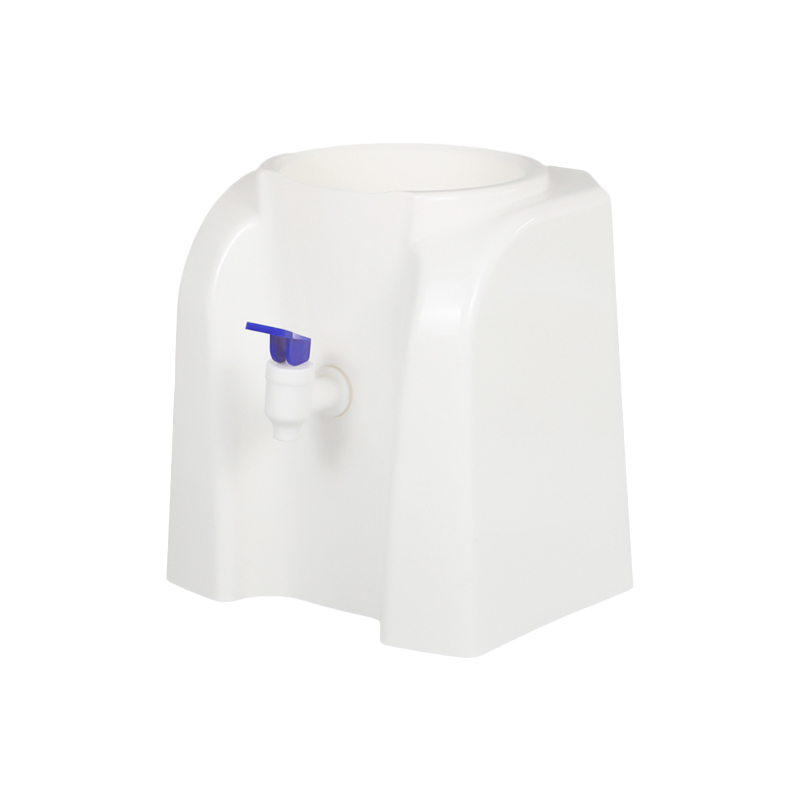
A dispenser heats along a compact chain: power switch, heating element inside a small hot tank, a thermostat or thermal cut-out, then a short food-grade silicone tube and the hot tap itself. Because the chain is short, diagnosis is quick, and the last three parts in it are inexpensive consumables rather than sealed components.
Safety locks and tap switches
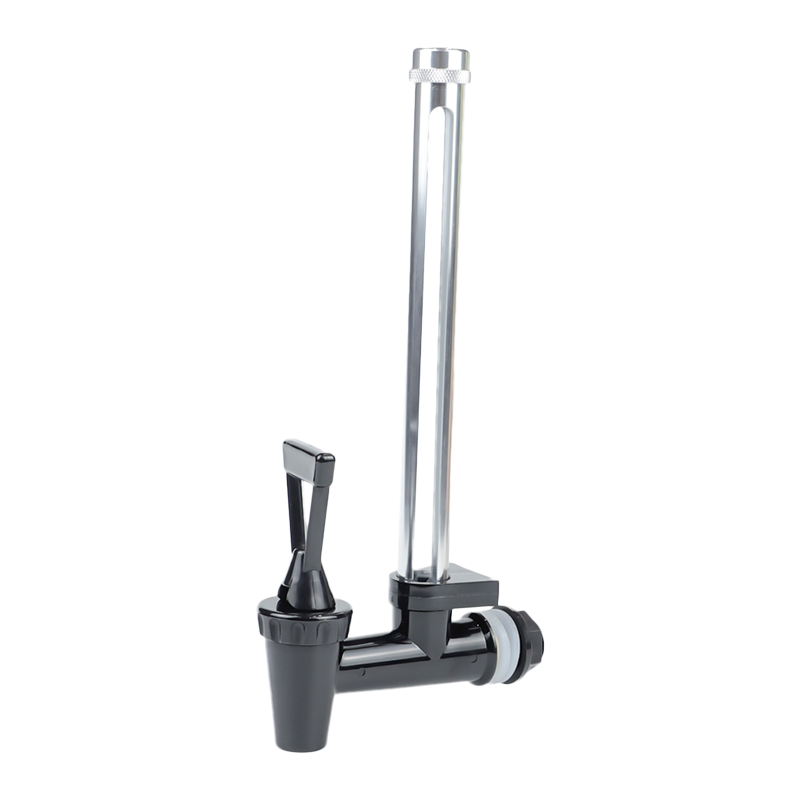
Start here, because it is free. Many hot water taps carry a child safety lock that requires a deliberate two-step action, such as sliding a collar before pressing the button, and a lock left engaged after cleaning looks exactly like a broken heater. Then run the cold tap: if cold water flows normally, power and bottle are fine and the problem is isolated to the hot side. If scalding is a concern in a household with children, fitting anti-scalding dispenser spigots reduces the risk at the outlet without touching the heater at all.
Scale inside the hot tank
Hard water leaves calcium deposits wherever heat concentrates, and a dispenser hot tank concentrates plenty of heat in a small volume. Scale narrows the outlet at the bottom of the tank, insulates the element, and eventually strangles flow to a trickle. Watch for these warning signs:
- Popping or hissing sounds while the machine heats
- White flakes appearing in the cup
- Hot water flow that slows down week by week
A food-safe citric acid descaling solution run through the tank and rinsed twice clears most cases. Where scale has hardened over years, the tank or element becomes a service replacement rather than a cleaning job, and since hot tanks are standard OEM parts on most machines, replacement restores original performance.
Tubes, seals, and airlocks
Between the tank and the tap sits a short silicone tube, and it fails in two predictable ways: it kinks when the machine has been moved, or it hardens with age and heat until it flattens and blocks flow. Seals inside the tap wear out too, producing a constant drip that owners often misread as a heating fault. Air trapped in the line after a bottle change also holds water back; holding the tap open for a few seconds or gently squeezing the bottle primes the line again. If the tube behind your tap looks dull, flattened, or cracked, a fresh food-grade silicone tube matched to your tap or quick fitting restores full flow in minutes.
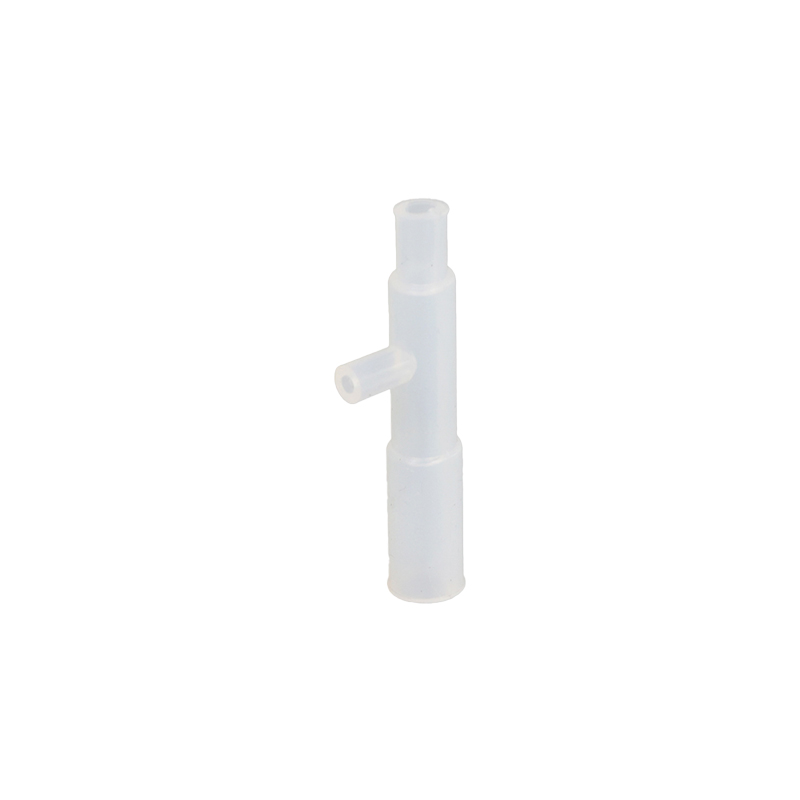 Food-Grade Silicone Water Dispenser TubeA flexible, clear, food-grade silicone tube that connects the tap or quick fitting. Replacing a kinked, hardened, or flattened tube restores full water flow in minutes without replacing the whole dispenser.View Product →
Repair or Replace: Judging the Faulty Part
The economics become simple once you group the parts. Anything that touches water daily and costs little to produce is a consumable: taps, tubes, and seals are meant to be swapped, not nursed. Elements and thermostats sit in the middle tier, worth testing before buying. A tank that is rusted through or ruined by scale usually tips the whole appliance into replacement, particularly past the eight-year mark. The table below sets out the typical pattern:
| Component | Typical Service Life | Sign It Has Failed | Replacement Effort |
|---|---|---|---|
| Dispenser hot or cold tap | 2 to 4 years of daily use | Dribbling, stiffness, cracks, weak flow | Easy, usually tool-free |
| Silicone connecting tube | 3 to 5 years | Hardening, flattening, discoloration | Easy, push-fit |
| Tap seal or gasket | 1 to 3 years | Constant drip from the spout | Easy with a new seal or tap |
| Heating element | 5 to 8 years | Light on, water stays cold | Moderate, basic tools |
| Dispenser hot tank | 5 to 8 years | Heavy scale, leaks, popping sounds | Moderate to difficult |
| Storage heater tank | 8 to 12 years | Rusty water, seam leaks | Replace the whole unit |
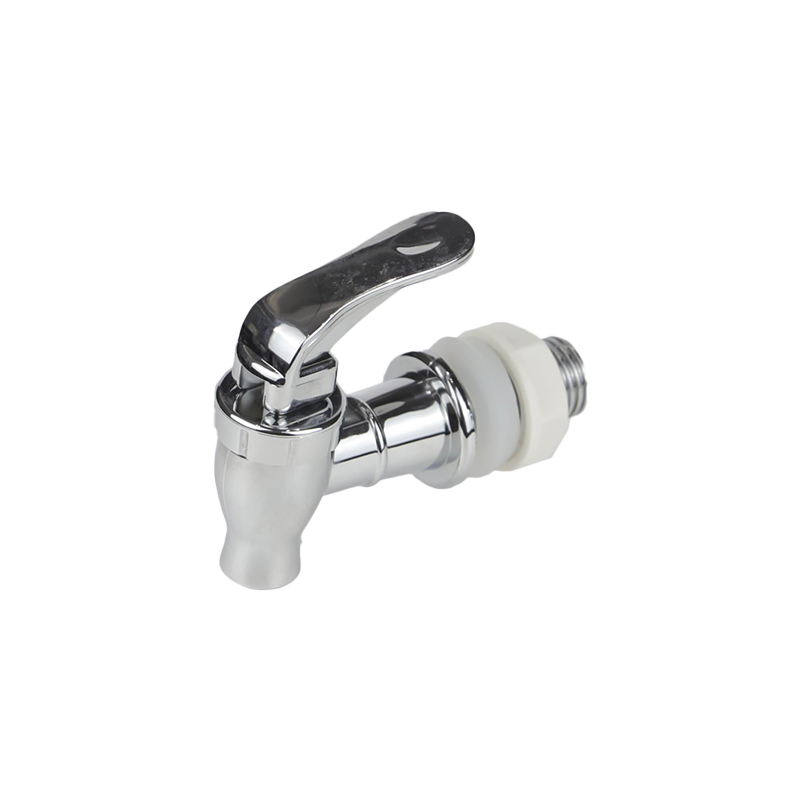
When the tap is the confirmed fault, match three details before ordering a replacement: the thread and mounting collar size, the temperature rating for the hot side, and the flow style, whether push-button, lever, or coin-operated. Most dispenser taps swap out in about ten minutes with no special tools. For a standard floor-standing machine, a hot and cold water tap in the widely used G16 pattern covers the majority of common fittings:
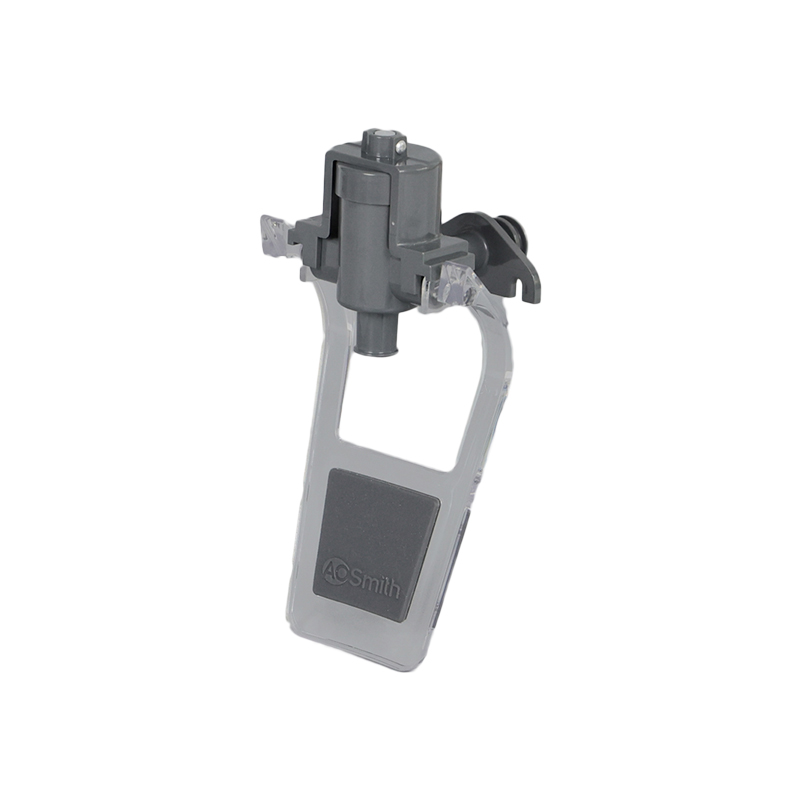 G16 Hot and Cold Water Dispenser TapA replacement dispenser tap in the widely used G16 pattern, supplied with body, handle, and O-rings. Checking thread size, temperature rating, and flow style before ordering ensures a simple ten-minute swap.View Product →
One safety note belongs here. If the housing feels hot and the machine has clearly been heating, but no water comes out at all, stop and let everything cool before loosening the tap. A blocked outlet on a hot tank holds scalding water and steam, and that combination deserves respect.
How to Prevent Hot Water Failures Before They Start
Prevention in this area is mostly scheduling, and every item on the list costs less than a single service call:
- Descale a dispenser hot tank every three to six months in hard water regions, and every six to twelve months where the water is softer. Run a food-safe citric acid solution through, then rinse twice before use.
- Flush a storage tank heater once a year. Draining a few gallons from the drain valve removes the sediment that degrades efficiency first and kills elements second.
- Replace the bottle before it runs empty. Dry-burn protection is a backstop, not a feature to rely on week after week.
- Inspect tubes and seals once a year while cleaning. A five-minute look catches hardening tubes and tired seals before they fail.
- Keep taps moving. Run hot water through every tap on the machine weekly, including the ones that see little use, so mineral film does not seize the valve.
Two upgrades earn their cost in homes with small children: a tap with a built-in child safety lock on the hot side, and outlets designed to cut scalding risk. A safety-lock hot water tap is the most common swap for exactly this reason:
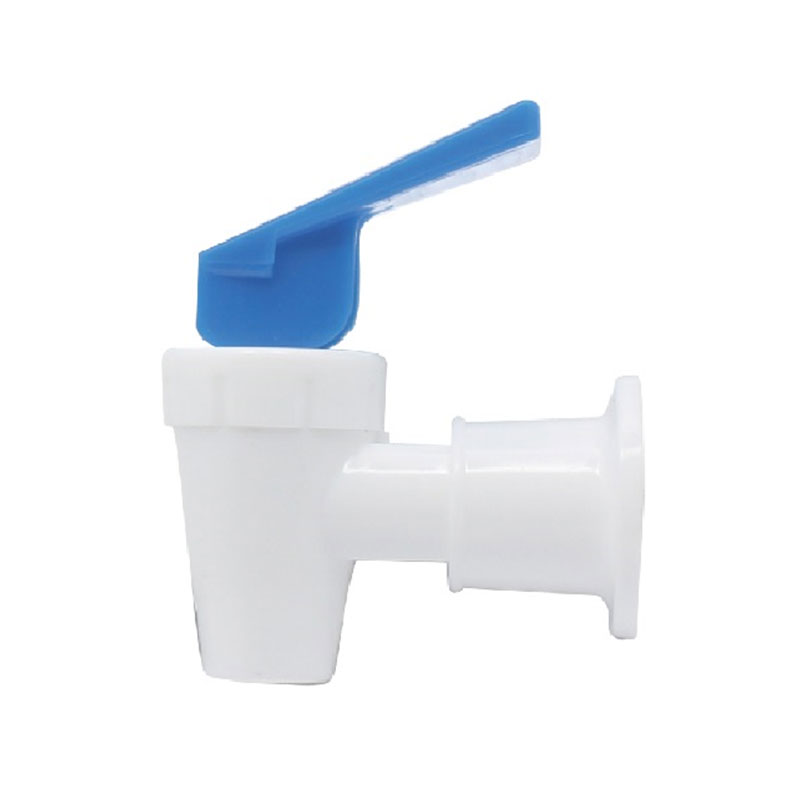 Child Safety Lock Hot Water Dispenser TapA hot water tap with a built-in child safety lock, designed to cut scalding risk. A practical upgrade for households with small children and a common swap when replacing a worn tap.View Product →
Frequently Asked Questions About Hot Water Failures
Why does my hot tap sputter before water flows?
Air in the line, usually after a bottle change or after the tank has been drained. Hold the tap open for a few seconds until the flow steadies. If sputtering returns every single time, look for a loose tube connection or a cracked tube drawing air in.
My dispenser heating light is on, but no hot water comes out. What now?
The heater works, so the fault sits downstream: scale blocking the tank outlet, a kinked or hardened silicone tube, a scaled or seized tap, or a safety lock left engaged. Work from the tap backward; in practice, the tap and the short tube behind it account for most of these cases.
How often should I descale a hot water dispenser?
Every three to six months in hard water areas and every six to twelve months where water is softer. Treat white flakes in the cup or popping sounds during heating as an immediate descaling signal rather than waiting for the calendar.
Why is my hot water lukewarm instead of hot?
Four usual reasons: a thermostat set too low, scale insulating the element, a partially failed element that still heats weakly, or, on tank heaters, a dead lower element leaving only the top of the tank warm. Cross off the dial first, descale second, and test the element last.
Can a broken tap make a working heater look dead?
Yes, and it is the most commonly missed diagnosis. A scaled or seized valve blocks flow even when the tank holds near-boiling water. Let the machine cool, remove the tap, and check whether water pours freely from the tank outlet; if it does, the tap was the whole problem.
When should I hand the job to a technician?
Call a qualified technician for gas supply problems, breakers that trip again immediately after a reset, leaks from the tank body itself, or any repair that means opening sealed heating components. Taps, tubes, and seals remain straightforward do-it-yourself territory.
Hot water failures look alarming but follow a short list of causes: power, heat source, scale, and the outlet path. Checking in that order turns a vague complaint into a named part in under half an hour, and the part is usually one of the inexpensive ones. If you are comparing replacement taps, tubes, or fittings for a dispenser, the full catalogue groups every tap, spigot, and silicone tube by type and application, which makes matching a part to your machine far simpler.