
 English
 русский
 日本語
 عربى
 Español
Content
- 1 Shut-Off Valve Types: Ball, Gate, Butterfly, and Plug
- 2 Throttling Valve Types: Globe, Angle, Pressure-Reducing, and Needle
- 3 One-Way Protection: Check Valves and Backflow Preventers
- 4 Safety and Level Control: Relief, Air-Release, and Float Valves
- 5 Plumbing Valve Types inside Water Dispensers and Beverage Equipment
- 6 How to Choose: Pressure, Temperature, Flow, and End Connection
- 7 Maintenance and Failure Modes: Quick Reference
- 8 Frequently Asked Questions about Plumbing Valve Types
- 8.1 What are the main categories of plumbing valves?
- 8.2 What is the difference between a ball valve and a gate valve?
- 8.3 Which valve is best for water flow regulation?
- 8.4 Are dispenser faucets considered plumbing valves?
- 8.5 Why should a gate valve never be partially opened?
- 8.6 How often should valves in beverage equipment be inspected?
A facility manager once installed gate valves on every branch of a new beverage water line. The valves sealed perfectly when fully open, so the crew throttled them halfway to balance flow across three dispensers. Within three months, the seats eroded, two stems started weeping, and the whole line had to be shut down for emergency repairs. The replacement set used ball valves rated for the working pressure, and the problem disappeared.
The takeaway applies to almost any plumbing or water dispensing purchase: choose a valve for a job, not just for a pipe size. Plumbing valve types fall into five functional families: shut-off, throttling, one-way flow, pressure relief, and level control. Each family has a different internal geometry, failure mode, and maintenance profile. This guide explains the most common types, compares their behavior, and shows how the same principles appear inside water dispensers, beverage taps, and dispensing spigots.
Shut-Off Valve Types: Ball, Gate, Butterfly, and Plug
Shut-off valves are isolation components. They are designed to run fully open or fully closed, with minimal pressure loss in the open position. Forcing them to operate partway open often causes erosion, noise, and premature seat failure.
Ball Valve
A ball valve uses a quarter-turn handle to rotate a drilled sphere. When the hole aligns with the pipe, flow passes with very low resistance; a 90-degree turn closes the bore completely. Two-piece and three-piece body configurations allow different maintenance levels, and the ball can be full-bore or reduced-bore. Full-bore versions have the same cross-section as the pipe, which matters for high-flow dispensing lines. Ball valves are the first choice for frequent on/off service on clean water circuits because the sealing surfaces wipe clean with each operation.
Gate Valve
A gate valve lifts a wedge-shaped disc out of the flow path using a multi-turn stem. When fully open, it offers almost no restriction, which makes it useful for main supply lines that stay open for long periods. The weakness appears when someone partially opens a gate valve to throttle flow: water rushing past the wedge erodes the seat and creates vibration. Once damaged, a gate valve often starts leaking even when fully closed. Treat gate valves strictly as isolation devices.
Butterfly Valve
A butterfly valve is a thin disc that rotates around a central shaft. It is compact, light, and quick to operate, which is why large-diameter water mains and equipment manifolds use it extensively. Because the disc remains in the bore even when fully open, the pressure drop is slightly higher than a full-bore ball valve, but still acceptable for most commercial water circuits.
Plug Valve
A plug valve uses a cylindrical or tapered plug with a passage through it. Rotating the plug opens or closes the flow in a single quarter turn. The design handles thicker fluids well, including syrups and sauces in food-service equipment, because the straight opening does not trap solids. Plug valves also appear in small beverage spigots where a simple, reliable shut-off is more important than fine flow control.
| Valve Type | Operation | Best For | Throttling |
|---|---|---|---|
| Ball | Quarter turn | Frequent on/off | Not recommended |
| Gate | Multi-turn | Long-term isolation | Never |
| Butterfly | Quarter turn | Large pipe diameters | Limited |
| Plug | Quarter turn | Viscous fluids, compact taps | Not recommended |
Throttling Valve Types: Globe, Angle, Pressure-Reducing, and Needle
Throttling valves are built to hold a partially open position and control flow rate with reasonable precision. Their internal passages force water through a changing gap, which creates pressure drop but gives the operator much better control than a simple shut-off valve.
Globe Valve
A globe valve has a movable disc that closes against a seat located in the middle of the body. The water path changes direction, so flow resistance is higher, but every turn of the stem produces a gradual, predictable change in flow. This makes the globe valve the standard choice for manual throttling on water lines and dispensing equipment where operators need to adjust delivery volume by hand.
Angle Valve
An angle valve is essentially a globe or shut-off valve with an inlet and outlet positioned at 90 degrees. The right-angle body saves space and is widely used where a supply pipe meets a wall outlet, a sink faucet, or a beverage machine inlet. The internal mechanism can be throttled, but the sharp turn creates extra pressure drop, so the valve size should be selected with that loss in mind.
Pressure-Reducing Valve
A pressure-reducing valve, often abbreviated PRV, automatically lowers upstream pressure to a set downstream level. A spring-loaded diaphragm or piston senses the outlet pressure and modulates the opening to hold it constant. In commercial water systems, a PRV protects downstream solenoid valves, faucets, and silicone tubing from excessive inlet pressure. For example, a building main at 6 bar may supply a dispensing station that should run at 2.5 bar; the PRV absorbs the difference and prevents water hammer at the point of use.
Needle Valve
A needle valve uses a tapered cone that slides into a matching seat, producing an extremely fine adjustment range. It is common in instrumentation, small-bore piping, and flavor-injection systems where the user measures flow in milliliters per minute rather than liters per minute. Needle valves must not be used as general shut-off devices because their narrow passage can clog and the fine taper wears quickly under full line pressure.
One-Way Protection: Check Valves and Backflow Preventers
Check valves allow water to flow in one direction only. Their main job is to stop reverse flow when a pump stops, when a supply pressure drops, or when a downstream vessel creates backpressure.
Swing Check Valve
A swing check valve has a hinged disc that opens with forward flow and drops closed by gravity when flow stops. It works best on horizontal pipes or vertical pipes with upward flow. On a pump discharge line, the swing check prevents pressurized water from spinning the pump backward after shutdown.
Spring-Loaded Check Valve
A spring-loaded check valve uses a spring to push the disc or ball onto its seat. It can be installed in any orientation, opens at a low crack pressure, and responds faster than a gravity swing valve. Compact spring checks are common inside dispensers, pump heads, and small-diameter beverage lines where space is tight.
Backflow Preventer
A backflow preventer is not a single valve but a complete protection assembly. It typically combines two check valves with an intermediate relief port. If both checks fail or if a pressure anomaly appears, the relief port opens and discharges the suspect water instead of allowing it to move backward into the clean supply. Facilities that connect dispensing equipment directly to drinking water lines use backflow preventers to separate the equipment circuit from the potable network.
Safety and Level Control: Relief, Air-Release, and Float Valves
Safety valves protect equipment from excessive pressure or trapped gas. They do not regulate normal operation; they intervene only when a condition becomes abnormal.
A pressure relief valve opens automatically when line pressure exceeds a preset spring tension, releasing water or air until the pressure drops back to a safe level. A temperature-and-pressure relief valve combines both sensing functions and is typically installed on hot water tanks and boilers. An air release valve sits at high points in a pipe system to vent trapped air that would otherwise cause gurgling, false pressure readings, and pump cavitation.
A float valve is a mechanical level control. A hollow float rides on the water surface in a tank; when the level rises to the set point, the float closes the inlet valve. When water is drawn down, the float drops and reopens the inlet. Float valves are used in cooling towers, wash tanks, and beverage preparation reservoirs where maintaining a constant liquid level matters more than precise chemical dosing.
Plumbing Valve Types inside Water Dispensers and Beverage Equipment
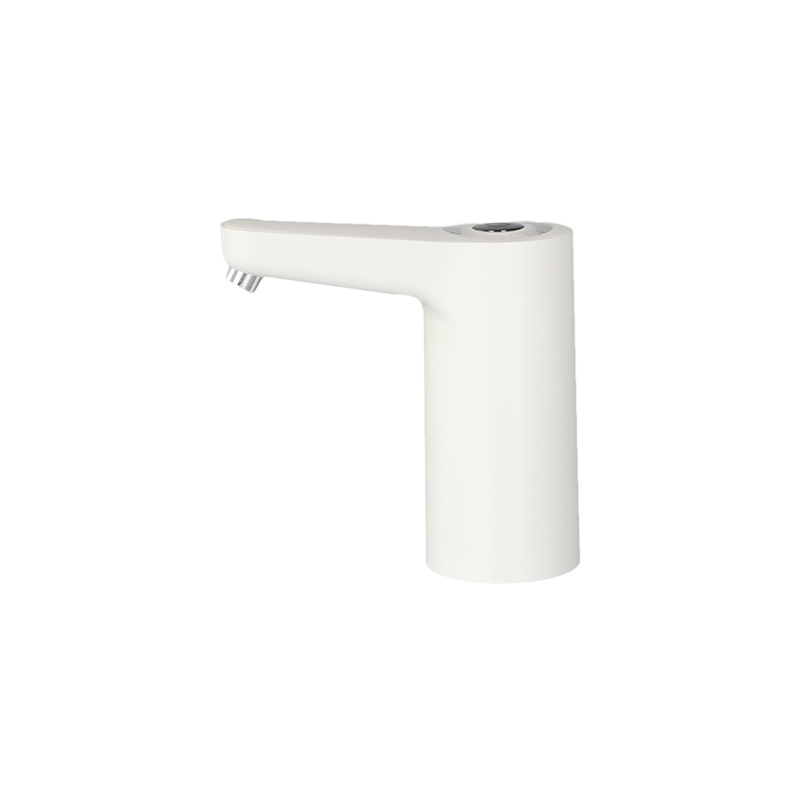
The same valve engineering principles appear in much smaller form inside water dispensers, coffee urns, and bottle-top pumps. Manufacturers call these end-point valves "faucets," "spigots," or "taps," but each one is a real valve with a defined internal mechanism. Understanding the family helps buyers compare models from different suppliers and avoid mismatching the valve to the liquid being dispensed.
Plastic dispenser faucets for hot and cold water usually use a compact ball or lift valve. The stem seal and the spring that returns the handle are the two components that determine lifespan. For frequent use, a larger sealing surface and a stainless spring reduce maintenance intervals. The four basic dispenser faucet layouts are described in detail in our guide to water-dispenser faucet valve configurations, which is useful when you compare replacement parts across brands.
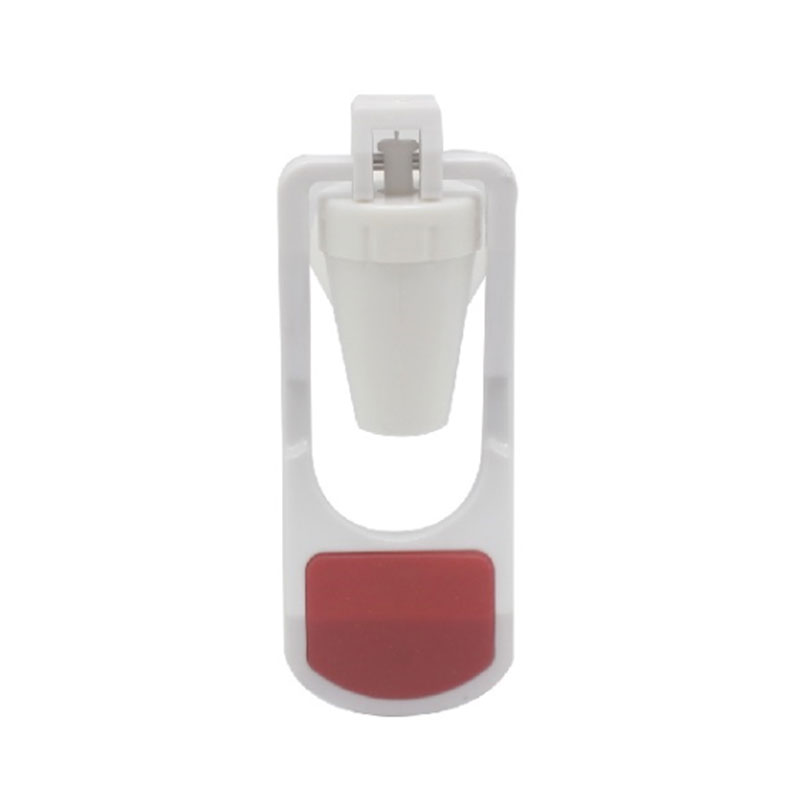 Water Dispenser Faucet with Push Lever HandleThis push-lever faucet for water dispensers and purifiers is a compact replacement part worth reviewing. Its simple mechanism and customizable color options make it a practical choice when comparing valve layouts for frequent-use dispensers.View Product →
Hot-water stations add a second requirement: protection from accidental scalding. An anti-scald spigot uses a two-stage opening mechanism. The user must first release an interlock, then rotate the handle, which prevents a child from opening the valve by a single motion. Some designs also incorporate a flow restrictor inside the valve body so that even a fully opened hot tap cannot deliver a dangerous jet of water.
 Hot and Cold Water Dispenser Tap Model M16This versatile M16 tap suits water dispensers and bottles, offering easy installation and multiple color choices. Given the emphasis on anti-scald features nearby, its two-temperature capability may warrant closer inspection for safe hot-water dispensing.View Product →
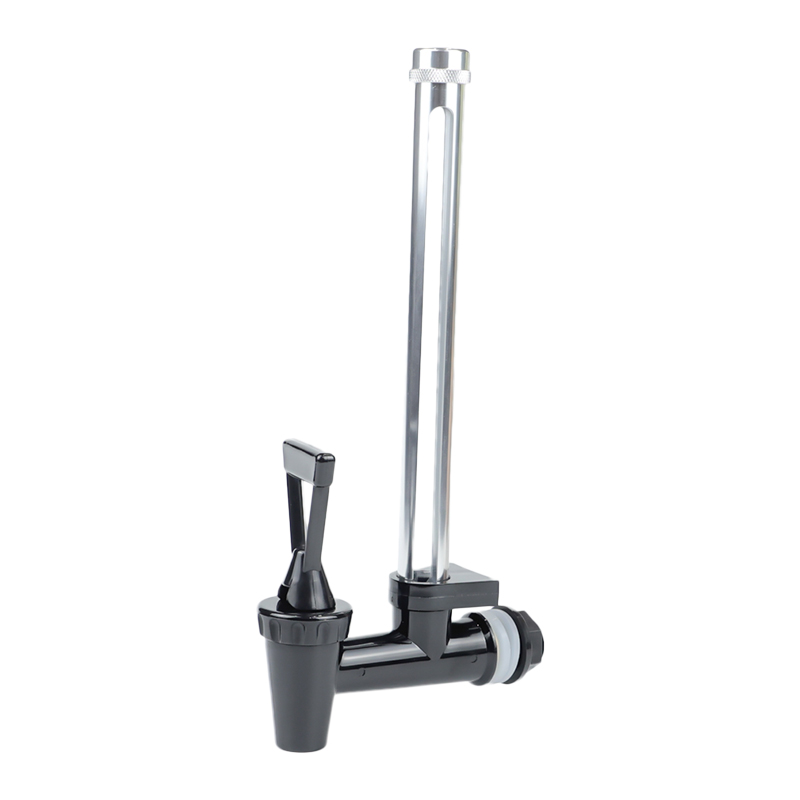
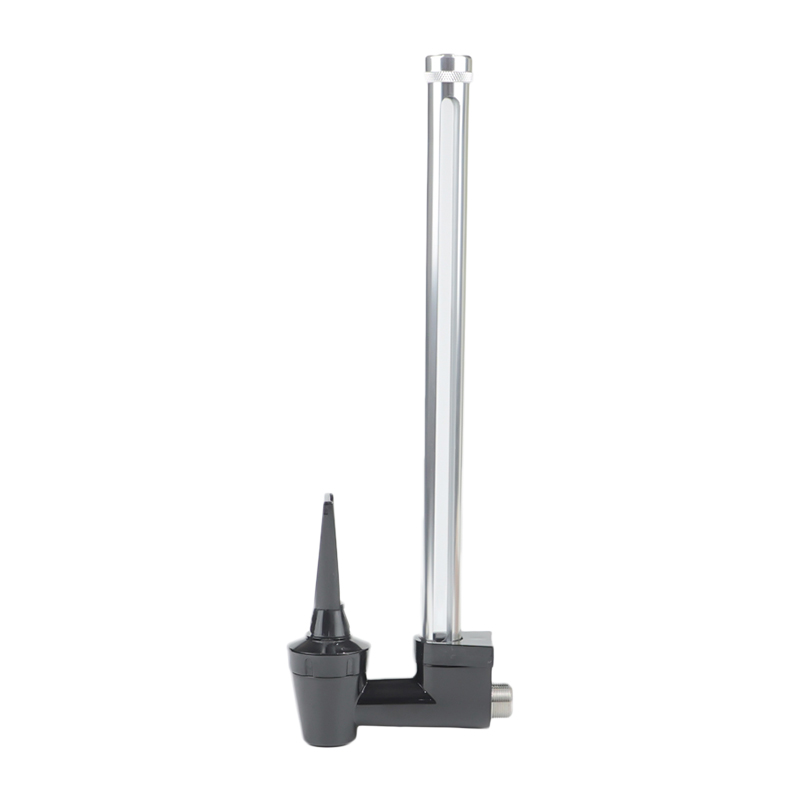
Coffee urns and drink dispensers often use a sight-glass faucet. The valve body includes a vertical glass tube that displays the liquid level inside the urn, so the operator can confirm the remaining volume without opening the lid. The valve core itself is usually a push-action globe or plug design, which gives a clean shut-off and does not drip between servings.
 Sight-Glass Water Tap for Coffee Dispensers P8This spigot with a visible water level tube is designed for coffee urns and purification systems. Its BPA-free materials and clear gauge help operators check remaining liquid without opening the container, aligning with the sight-glass faucet discussion in the surrounding text.View Product →
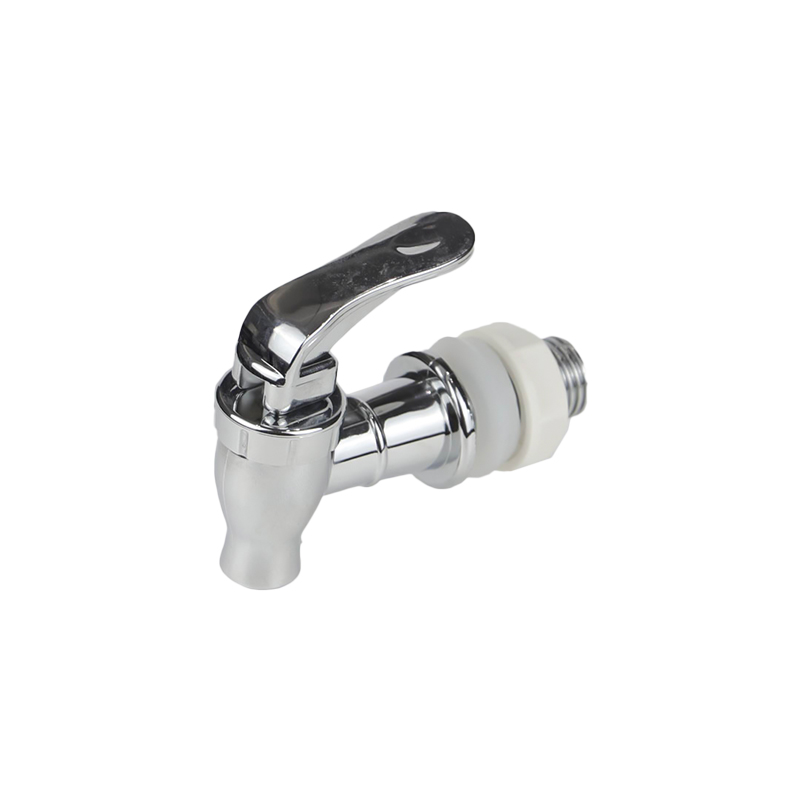
Electroplated spigots, metal juice dispenser taps, and beer-style faucets all belong to the same families: ball, plug, or globe mechanisms with different trim materials and surface finishes. The internal geometry defines the flow behavior; the finish defines corrosion resistance and how easily the valve can be wiped clean in a kitchen environment. When you plan a new product line or replace worn components, match the valve mechanism to the liquid viscosity, the operating temperature, and the frequency of cleaning cycles.
How to Choose: Pressure, Temperature, Flow, and End Connection
A practical selection sequence starts with the fluid, not with the valve brand. Use the following checklist to narrow the list of plumbing valve types for a specific project:
- Working pressure: confirm the maximum pressure at the valve inlet, including transient peaks from pumps.
- Media temperature: cold water, hot water, or steam each require different seal materials.
- Flow requirement: choose the nominal size so that the valve operates between 20 and 80 percent of its rated capacity.
- Viscosity: syrup, juice concentrate, and sauce need a straight-through design such as a ball or plug valve.
- End connection: thread type, push-fit, clamp, or flange must match the existing piping system.
- Maintenance access: valves that are cleaned daily should have smooth surfaces and removable internals.
The table below offers a starting point for typical water and beverage applications. It is a judgment matrix, not a fixed rule, because line pressure and temperature can shift a recommendation.
| Application | Primary Choice | Why |
|---|---|---|
| Main water supply | Gate or butterfly | Low pressure drop when open |
| Point-of-use shut-off | Ball or angle | Fast action, compact body |
| Manual flow balancing | Globe or needle | Fine throttling control |
| Pump discharge | Swing check | Prevents reverse rotation |
| Hot water safety | T&P relief | Overpressure and overtemperature protection |
| Syrup or concentrate | Plug or ball | Straight passage avoids clogging |
If you are evaluating a new dispenser design or an upgrade project, the current tap and pump catalogue provides dimensional drawings and model codes that you can compare side by side before ordering samples.
Maintenance and Failure Modes: Quick Reference
Even a correctly selected valve will wear if its environment changes. The table below lists common symptoms in water dispensing systems and their usual causes. When a symptom appears, inspect the valve first before replacing pumps or solenoids.
| Symptom | Likely Cause | Correction |
|---|---|---|
| Leak around stem | Worn O-ring or packing | Replace stem seal |
| Dripping from outlet | Damaged seat or foreign particle | Clean seat, replace cartridge |
| Handle requires high force | Scale buildup or lubricant dried | Descale, re-lubricate |
| Reduced flow when open | Partially blocked bore or collapsed hose | Inspect passage and tubing |
| Chattering or hammering | Throttled gate valve or swing check | Convert to ball or spring check |
Track the cleaning frequency and water quality before making a replacement decision. A valve that fails every six months in a high-scale region may last five years on softened water. The failure pattern is a more reliable indicator than the calendar.
Frequently Asked Questions about Plumbing Valve Types
What are the main categories of plumbing valves?
Plumbing valves are grouped by function: shut-off valves isolate sections, throttling valves adjust flow rate, check valves prevent reverse flow, safety valves relieve excess pressure, and float valves control liquid level. Each category contains two or three common geometries, such as ball and gate for shut-off, or globe and needle for throttling.
What is the difference between a ball valve and a gate valve?
A ball valve closes with a quarter-turn of a drilled sphere, while a gate valve closes by lowering a wedge with multiple turns of a threaded stem. Ball valves act faster and handle frequent operation better; gate valves offer lower pressure drop when fully open, but they must not be used for throttling.
Which valve is best for water flow regulation?
A globe valve is the most common manual choice for regulating water flow. If the required flow rate is very small or the adjustment must be extremely fine, a needle valve gives better precision. Ball and gate valves are not designed for sustained throttling.
Are dispenser faucets considered plumbing valves?
Yes. A dispenser faucet or spigot is a compact valve body with a ball, plug, globe, or lift mechanism. The same selection rules apply: match the internal geometry to the fluid, the pressure range, and the operating duty cycle.
Why should a gate valve never be partially opened?
A partially open gate valve leaves the wedge edge in fast-moving water. High-velocity flow erodes the seat and the disc, creates vibration, and can eventually prevent the valve from sealing even when fully closed.
How often should valves in beverage equipment be inspected?
Quarterly inspection is a practical baseline for commercial beverage equipment. When the water supply has high hardness or the equipment operates more than ten hours per day, shorten the interval to every two months and check the stem seals, seat condition, and spring return action.