
 English
 русский
 日本語
 عربى
 Español
Content
- 1 What Is a Hose Barb?
- 2 How a Hose Barb Grips and Seals in One Motion
- 3 Hose Barb Sizing: Always Start with the Tubing Inner Diameter
- 4 Hose Barb Materials: Match the Barb to the Liquid and to the Tube
- 5 Where Hose Barbs Live in Water Dispensers and Beverage Equipment
- 6 Hose Barb vs. Compression vs. Quick-Connect Fittings
- 7 Why Hose Barb Connections Leak and How to Fix the Cause
- 8 How to Build a Leak-Free Hose Barb Connection in Six Steps
- 9 Frequently Asked Questions About Hose Barbs
What Is a Hose Barb?
A hose barb is a short cylindrical fitting whose surface carries two or more sloping ridges, called barbs. When you push a flexible tube over those ridges, the barbs embed into the tube wall and hold the tube in place by mechanical interference. No glue, no solder, no threading, and no special tools are required; the connection forms in one movement and can be undone just as quickly. That simplicity is why hose barbs appear in nearly every water, beverage, pneumatic, and light industrial system that relies on flexible tubing.
Here is the direct answer to the practical buying question: if your working pressure stays under roughly 2 bar and you are using silicone, EPDM, polyurethane, or soft PVC tubing, a hose barb is the lowest-cost and most reliable connector you can specify. Above that pressure, the same barb still works once you add a clamp sized to the tubing.
Every barbed fitting has the same anatomy. The barbed stem carries between two and five ridges. The shoulder is a flat stop that tells you the tube is fully seated. The body is the hexagonal or round section you grip during assembly. The termination is whatever connects the fitting to the rest of the system, which is usually a male or female thread, a push-in panel end, or a second barb for joining two hoses together.
How a Hose Barb Grips and Seals in One Motion
A barbed connection performs two jobs at the same time. The ridges handle gripping, while the compressed tube body around the stem handles sealing. When you push the tube on, its inner diameter stretches over the ridges and presses tightly against the sloping faces. The sharp trailing edge of each ridge acts like a ratchet pawl: any pull on the tube makes the ridge bite deeper into the tube wall.
Sealing is a separate effect. The tube material inside that stretched zone stays under continuous elastic compression, and that compression is what blocks liquid from creeping along the stem. A soft tube therefore seals more easily than a stiff one; the fluid compatibility stays the same, but the radial interference force is higher.
Pressure Creates a Pull-Off Force
Never forget that internal pressure is always trying to push the tube off the barb. The axial force grows with the bore area. At 4 bar, the push-off force on a 1/2-inch bore is approximately 5 kgf, while a 1/4-inch bore sees only about 1.3 kgf. This is why larger lines generally receive a worm-gear clamp as standard practice, and why adding a clamp to anything above 3/8 inch is a sensible instinct.
Use this rule as a baseline: keep an unclamped joint below about 2 bar (29 psi). Above that, add a clamp and position it behind the last ridge, against the shoulder, so the tube cannot walk backward off the stem.
Hose Barb Sizing: Always Start with the Tubing Inner Diameter
You size a hose barb by the inner diameter (ID) of the tubing, never by the outer diameter. A 6 mm tube gets a 6 mm barb; a 1/4-inch tube gets a 1/4-inch barb. When the nominal sizes match, the tube stretches only a small percentage and creates a clean interference fit. A caliper measurement of the relaxed tube ID is the only reliable way to confirm the size, because printed markings wear off quickly during handling.
| Tubing ID (imperial) | Tubing ID (metric) | Barb size | Recommended clamp | Insertion effort |
|---|---|---|---|---|
| 1/8 in | 3.2 mm | 1/8 in | Spring clamp | Very low |
| 1/4 in | 6.35 mm | 1/4 in | Spring or worm-gear clamp | Low |
| 3/8 in | 9.5 mm | 3/8 in | Worm-gear clamp | Moderate |
| 1/2 in | 12.7 mm | 1/2 in | Worm-gear clamp | Moderate |
| 3/4 in | 19 mm | 3/4 in | Heavy worm-gear clamp | High |
| - | 6 mm | 6 mm | Spring clamp | Low |
| - | 8 mm | 8 mm | Spring or worm-gear clamp | Low |
| - | 10 mm | 10 mm | Worm-gear clamp | Moderate |
| - | 12 mm | 12 mm | Worm-gear clamp | Moderate |
A barb that is 0.1 to 0.3 mm larger than the tube ID provides the ideal interference range for silicone and EPDM tubing. Harder materials such as nylon or PTFE need an exact size match and sometimes a brief controlled heating step; otherwise the tube can split or simply refuse to slide over the ridges.
Hose Barb Materials: Match the Barb to the Liquid and to the Tube
Four material families cover nearly every hose barb application: commodity plastics, engineering plastics, brass, and stainless steel. Each changes the cost, the temperature ceiling, and the chemical resistance of the joint. Selecting on price alone is a common mistake; the wrong polymer can stress-crack when it meets a particular fluid.
- Polypropylene (PP): the default for potable-water lines and moderately chemical-resistant systems. It is light, inexpensive, and resists most weak acids and alkalis, but it becomes brittle near freezing and softens above roughly 90 °C.
- Nylon (PA): tough and abrasion-resistant, widely used on compressed-air circuits. It absorbs a little moisture, which makes it less suitable for permanent wet installations.
- Brass: machines beautifully and resists water corrosion, which makes it the standard for threaded barb adapters in plumbing and heating systems. Keep it away from ammonia-based fluids.
- 304/316 stainless steel: the food-and-beverage favourite. Grade 304 is fine for water and most beverages; grade 316 adds extra resistance in chloride-laden environments such as dosing systems.
- PVDF and PEEK: specialist choices. PVDF handles aggressive chemicals and high-purity circuits; PEEK is selected when the medium is hot and the connection must never relax over time.
The tube is the other half of the joint, and its material must be resilient enough to deform over the barb yet stiff enough not to creep. Food-grade silicone is the most common choice in drinking-water systems because it stays flexible across a wide temperature span and resists ozone and UV better than most rubbers. Before you finalise the tube side, read our detailed assessment of whether a food-grade silicone tube can serve as a permanent water delivery tube.
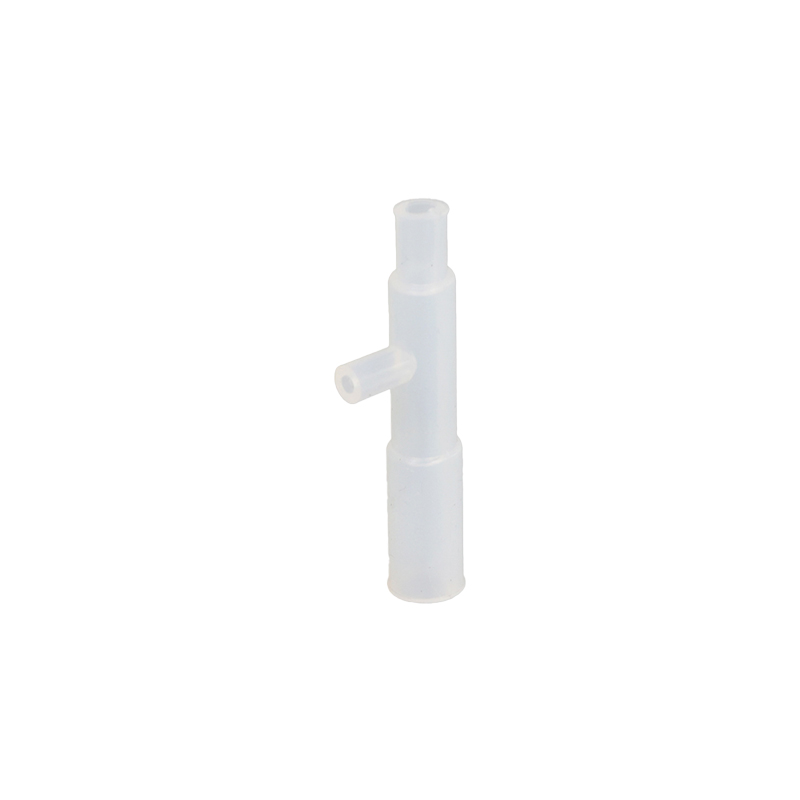 Food-Grade Silicone Tubing for Barbed Water ConnectionsThis clear flexible silicone tube is food-grade and fits securely over barbed fittings in water dispensers and beverage pumps. It resists heat, cold, and chemicals, making it a durable replacement for worn lines.View Product →
Where Hose Barbs Live in Water Dispensers and Beverage Equipment
Open any electric water dispenser and you will find barbed fittings at every joint in the water path. The inlet tube from the bottle drops into the pump head, the pump outlet carries a short silicone tube pushed over a 6 mm or 1/4-inch barb, that tube routes to the cold or hot tank, and a final tube lands on the barbed inlet of the dispense tap. The entire fluid circuit is assembled without a single soldered joint, which keeps production cost low and makes disassembly for cleaning genuinely practical.
From Pump to Dispense Tap
The tube side of that circuit is almost always food-grade silicone. It is soft enough to conform to the barb profile on the first fit, yet resilient enough to keep its grip after months of daily flexing. At the far end, the same tube terminates on a water dispenser tap whose inlet is moulded with the identical barb profile. A worn tap can therefore be swapped by sliding the tube off, sliding the new tap on, and re-tightening one clamp; the whole replacement takes about two minutes.
 Replacement Plastic Tap with Barbed Inlet for DispensersThis plastic dispenser tap offers a standard barbed inlet for quick silicone tube attachment. Made from PP/PC/ABS, it is leak-free and easy to swap onto existing water lines, restoring function in benchtop or bottle-top dispensers.View Product →
Portable and Outdoor Dispensing
Barbed joints are not confined to benchtop machines. Portable 5-gallon bottle pumps use the same push-on logic for their outlet spouts, and manual pressure pumps often end in a short tube stub that is stiff enough to direct water into a cup while still flexing when the bottle is knocked over. The fitting standard is identical to a benchtop dispenser: matched tube ID, full seating against the shoulder, and the clamp placed behind the last ridge.
The wider beverage industry works in exactly the same way. Coffee urn spigots, beverage dispenser taps, syrup pumps, and stainless steel mini-keg taps generally have one threaded side for the container and one barbed side for the hose. The barbed side accepts a flexible tube that carries the drink from the tank to a sealed transfer line or directly into a serving cup.
Hose Barb vs. Compression vs. Quick-Connect Fittings
The hose barb competes with two other connector families. A compression fitting squeezes a ferrule around a rigid pipe, while a push-to-connect fitting locks a tube with an internal grab ring. Each has a different cost and behaviour profile, summarised below.
| Consideration | Hose barb | Compression fitting | Push-to-connect |
|---|---|---|---|
| Assembly | Push tube over ridged stem | Tighten nut over ferrule | Push tube into release collar |
| Tools needed | None; screwdriver for clamp | Two wrenches | None |
| Reconnection | Easy; pull off after clamp release | Moderate; re-tighten nut | Easy; press collar to release |
| Pressure ceiling | Moderate unclamped; high when clamped | High | High |
| Relative cost | Lowest | Mid | Highest |
| Best suited for | Flexible tubing, water, air, food lines | Rigid metal or PEX piping | Pneumatics and frequently cycled joints |
The barb wins when the system uses flexible tubing and the joint is rarely cycled. If you expect thousands of connect-disconnect operations, the higher price of a push-to-connect fitting pays for itself. If the line is rigid, a compression fitting is usually the more honest choice.
Why Hose Barb Connections Leak and How to Fix the Cause
A barbed joint does not leak by itself; it leaks because of a sizing or assembly mistake somewhere in the chain. In practice, most field failures trace back to one of these six causes.
- Wrong size match: a tube ID noticeably larger than the barb OD leaves no interference and leaks immediately. Verify both diameters with a caliper before assembly.
- No clamp above 2 bar: internal pressure pushes the tube off; the larger the bore, the higher the pull-off force.
- Angled or ragged tube cut: an uneven tube end cannot butt against the shoulder, leaving a leak channel.
- Clamp placed over the barb instead of behind it: the clamp then squeezes the ridge zone, blocks full seating, and can even crack the barb.
- Aged tube material: tubes that have been overheated, exposed to UV, or chemically attacked lose the elastic memory needed for a tight seal.
- Reusing a stretched tube: once a tube has been permanently enlarged by long service, it will never grip the same barb again.
The fix starts with inspection: measure both parts, cut the tube end square, push the tube fully against the shoulder, and place the clamp behind the final ridge. Nine out of ten barb leaks disappear once those four steps are done correctly.
How to Build a Leak-Free Hose Barb Connection in Six Steps
- Cut the tube end square with a sharp fine-tooth blade. A ragged cut guarantees a leak path along the stem.
- Measure the relaxed inner diameter of the tube with a caliper and confirm it matches the nominal barb size.
- If the tube feels stiff, dip its end in warm water or a compatible lubricant. Never use oil or grease on food or drinking-water lines.
- Push the tube straight onto the barb while rotating it slightly. Keep pushing until the end reaches the shoulder.
- Fit a spring or worm-gear clamp and position it directly behind the last ridge, not over the ridge itself.
- Tighten a worm-gear clamp only until it indents the outer tube surface slightly; over-tightening cracks a plastic barb.
Portable pumps obey the same rules. On a manual water bottle pump with an extra short outlet tube, the tube stub is usually moulded in place, but any replacement tube must still seat fully against the shoulder. A partial seat is the classic cause of a pump that spits water from behind the spout.
 Manual Water Bottle Pump with Extra Short Outlet TubeA hand-operated pump for 2-6 gallon water bottles, featuring an extra short tube for direct pouring. Its vacuum seal prevents outside air entry, requiring only a few pumps to dispense—ideal for camping, offices, or emergencies.View Product →
When you specify components for a full assembly, keep every barb bore aligned with the tubing series you already stock. Start from our product catalogue, which lists dispenser taps, pumps, and silicone tubes by connection style, so you can build a matched water path without guessing between imperial and metric bores.
Frequently Asked Questions About Hose Barbs
Can I use a hose barb without a clamp?
Yes, below about 2 bar (29 psi), with a soft tube that has not been stretched by earlier service. The moment you raise the pressure, heat the fluid, or risk a sideways pull, fit a clamp and place it behind the last ridge.
Which material should I choose: plastic, brass, or stainless steel?
Let the liquid decide. For drinking water and food contact, choose food-grade polypropylene or 304/316 stainless steel. For general plumbing and compressed air, brass is durable and easy to thread. For aggressive chemicals, pick the material from the compatibility chart of that specific fluid.
Why does my tube keep popping off the barb?
The usual culprits are a barb one size too small, a tube stretched from earlier service, or no clamp on a pressurised line. Cut off the stretched section, confirm the bore size, push the tube to the shoulder, and clamp behind the last ridge.
Can a hose barb handle hot water or hot liquids?
The barb material usually tolerates far more heat than the tube. Polypropylene barbs suit continuous use up to about 90 °C, and stainless steel handles much more, but the practical limit in hot-water service is the silicone tubing itself; PVC and polyurethane soften well before that point.
What is the difference between a hose barb and a hose nipple?
In practice, almost none. Nipple names a short connector with barbed ends on one or both sides, while barb names the ridge profile itself. A straight double-barb adapter is often sold as a nipple, and the same part with threads on one end is usually sold as a threaded barb fitting.