
 English
 русский
 日本語
日本語 عربى
عربى Español
Content
- 1 What Is a Faucet Connector and Why It Matters
- 2 Types of Faucet Connectors: A Practical Breakdown
- 3 Faucet Connector Sizing: Getting the Numbers Right
- 4 Outdoor Spigot Connectors: Special Considerations
- 5 Installation Steps for a Faucet Connector Replacement
- 6 Material Compatibility: Matching the Connector to the Water Chemistry
- 7 Common Faucet Connector Problems and How to Diagnose Them
- 8 Faucet Connector Standards and Certifications Worth Knowing
- 9 When to Call a Plumber Instead of DIY
- 10 Maintenance Schedule and Longevity Tips
What Is a Faucet Connector and Why It Matters
A faucet connector is a short supply line that links your shutoff valve to the faucet body underneath the sink. Without a properly sized, properly rated connector, even a brand-new faucet will leak, corrode, or fail within months. Choosing the wrong connector accounts for roughly 30% of DIY plumbing callbacks, according to plumbing supply industry surveys — and most of those mistakes come down to ignoring diameter, length, or material compatibility.
The term is sometimes used interchangeably with "supply line," but in professional plumbing, a faucet connector refers specifically to the flexible or semi-rigid tube that bridges the gap between the valve and the faucet inlet. It is different from the main water supply pipe running inside the wall. Understanding this distinction before you buy anything will save you at least one unnecessary trip to the hardware store.
The same connector logic applies whether you are working on a kitchen sink, a bathroom lavatory, a utility basin, or an outdoor spigot hookup. Each application has specific pressure ratings, temperature tolerances, and fitting standards — and confusing one category with another is a straightforward path to a water-damage claim.
Types of Faucet Connectors: A Practical Breakdown
Not every connector suits every job. The market offers at least five distinct categories, each with a different set of trade-offs between cost, durability, and ease of installation.
Braided Stainless Steel Connectors
These are the most widely sold type in North America. A braided stainless shell wraps around a rubber or polymer inner tube, combining flexibility with mechanical protection. Burst pressure ratings typically range from 800 to 1,500 psi, far exceeding normal residential line pressure of 40–80 psi. They come in lengths from 9 inches to 36 inches and accept both 3/8-inch compression and 1/2-inch IPS fittings on the valve end.
The main failure point is the rubber inner tube, which degrades when exposed to chloramine-treated water — increasingly common in municipal systems — or when left kinked under a cabinet for years. Replacing braided connectors every 10 years is a reasonable preventive schedule, though many plumbers recommend 5–7 years in high-chloramine areas.
PEX Supply Lines
Cross-linked polyethylene connectors handle higher temperature ranges — up to 200°F (93°C) — making them appropriate for hot-water lines near water heaters or in radiant heating hookups. They resist chloramine degradation better than standard rubber and are significantly lighter than copper alternatives. The main drawback is limited flexibility: PEX holds bends reasonably well but can crack if forced into tight angles during installation.
Copper Corrugated Connectors
Corrugated copper tubes were the standard before braided stainless took over. They remain popular among plumbers working on older homes because they match legacy copper supply systems seamlessly. They are stiffer than braided options, which means less risk of accidental kinking, but they also require more clearance behind the cabinet — sometimes a problem in shallow vanities. Corrugated copper typically outlasts braided connectors by 10–15 years in average conditions but costs two to three times as much at retail.
Polymer Braided Connectors
These look similar to stainless braided lines but use a nylon or polypropylene braid instead of metal. They are lighter, lower in cost, and adequate for cold-water applications. However, they carry lower burst ratings — usually 400–600 psi — and are not recommended for hot-water lines or locations where the connector may contact sharp cabinet edges. They are common in rental-grade builds where upfront cost matters more than longevity.
Spigot-to-Hose Connectors for Outdoor Applications
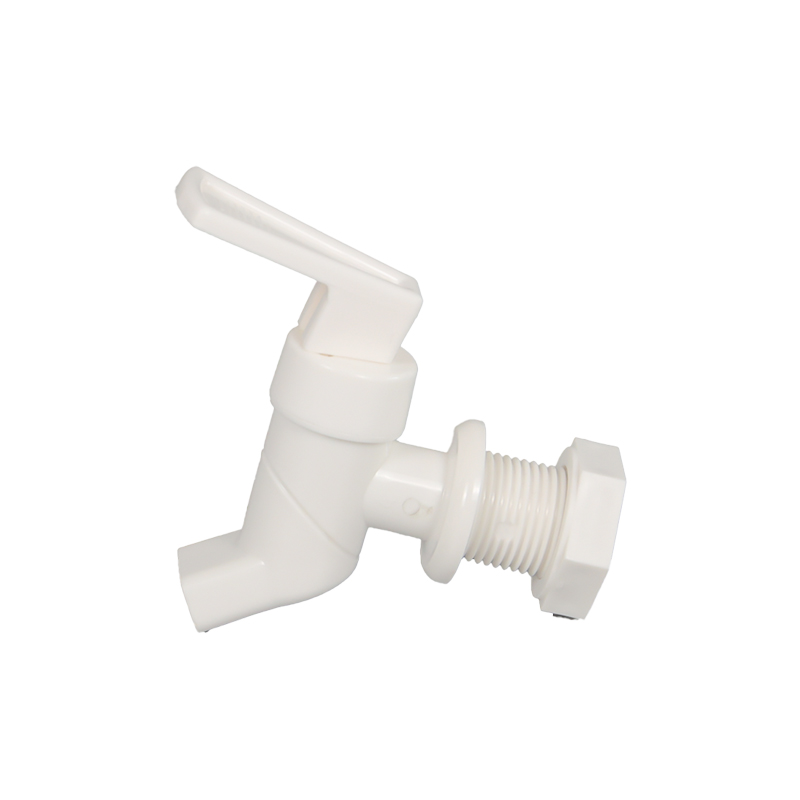
When the connection point is an outdoor spigot rather than an indoor shutoff valve, the connector type changes considerably. Spigot connectors — also called hose bib connectors or garden faucet adapters — use GHT (Garden Hose Thread) fittings standardized at 3/4 inch, rather than the compression or IPS fittings used indoors. A spigot connector must be rated for outdoor UV exposure and freeze-thaw cycling, conditions that destroy indoor-rated rubber almost immediately. Frost-free spigot connectors add an additional check valve or extended stem to protect against backflow and freezing in cold climates.
Faucet Connector Sizing: Getting the Numbers Right
Wrong sizing is the single most preventable installation error. Faucet connectors are defined by three measurements: the valve-end fitting size, the faucet-end fitting size, and the overall length.
| Application | Valve-End Size | Faucet-End Size | Typical Length |
|---|---|---|---|
| Bathroom faucet | 3/8" compression | 1/2" IPS (M) | 12"–20" |
| Kitchen faucet | 3/8" compression | 1/2" IPS (M) | 20"–30" |
| Toilet fill valve | 3/8" compression | 7/8" ballcock | 12"–16" |
| Outdoor spigot hose adapter | 3/4" GHT (F) | 3/4" GHT (M) | N/A (rigid adapter) |
| Utility/laundry faucet | 1/2" IPS | 1/2" IPS (M) | 24"–36" |
Measuring length correctly requires accounting for the actual straight-line distance from the center of the shutoff valve outlet to the center of the faucet inlet, then adding 2–3 inches to allow for the curved routing that avoids sharp bends. A connector that is too short will be held under permanent tension — one of the most common causes of premature fitting failure.
Always measure before purchasing. The label on a connector package lists nominal length, which is measured end-to-end on the fitting bodies, not the tube itself. If you are replacing an existing connector, the old tube's nominal length is stamped or printed on the packaging, or you can measure the old tube while it is still installed and round up to the next standard size.
Outdoor Spigot Connectors: Special Considerations
An outdoor spigot — sometimes called a hose bib, sillcock, or exterior faucet — presents connector challenges that indoor installations do not. The spigot is the final point in your home's water distribution system before water reaches a hose, an irrigation line, or any other outdoor device. Any connector attached to a spigot must tolerate direct sunlight, temperature extremes, physical abrasion, and the repeated connect-disconnect cycle that garden and utility use demands.
Choosing a Spigot Connector for Garden Use
Standard garden hose connectors attach at the spigot's 3/4-inch GHT male thread. The most durable options use brass bodies rather than plastic, since brass handles freeze-thaw cycles without cracking. Brass spigot connectors typically last 15–25 years in outdoor conditions; plastic equivalents may fail in 3–5 years in climates with winter temperatures below 20°F (–7°C).
Quick-connect spigot adapters — the push-button type that allow hose attachment and detachment without threading — are convenient but introduce an additional seal point that can weep under pressure. If you attach multiple hoses, a spigot splitter connector distributes flow to two or more outlets from a single spigot body. Quality splitters include individual shutoff valves on each port so you can close one outlet without cutting pressure to the other.
Frost-Free Spigots and Backflow Connector Requirements
A frost-free spigot (also called a freezeless sillcock) has a stem that extends 8–12 inches into the heated envelope of the wall, so the water shutoff point stays above freezing even when the exterior faucet body gets cold. When using a frost-free spigot, you must never leave a hose connected during freezing weather — a connected hose traps water in the stem and defeats the freeze-protection design entirely. This is one of the most common causes of burst pipes in homes that already have frost-free spigots installed.
Most building codes in North America now also require a vacuum breaker (anti-siphon device) at the spigot connection point to prevent backflow — the reverse siphoning of garden hose water, fertilizer, or pesticide residue back into the potable supply. Many modern frost-free spigots have this device built in. If yours does not, a separate spigot backflow preventer connector threads onto the GHT outlet before your hose attaches. These are inexpensive — typically $5–$15 — and are non-negotiable from a public health standpoint.
Spigot Thread Tape and Leak Prevention
GHT threads on a spigot are straight (not tapered like NPT threads), which means they rely entirely on the rubber washer inside the hose end — not thread sealant — to prevent leaks. Applying PTFE tape to GHT threads is a common mistake that does nothing useful and can make it harder to achieve a proper washer seal. However, IPS and NPT threads on the wall-side of a spigot body do benefit from two wraps of PTFE tape before threading the fitting in.
Installation Steps for a Faucet Connector Replacement
Replacing a faucet connector is a task most homeowners can complete in under 30 minutes with basic tools. Here is the standard process, with notes on where people commonly go wrong.
- Turn off the shutoff valve under the sink by rotating the handle clockwise until it stops. If the valve has not been used in years, turn it gently — old gate valves can break if forced.
- Open the faucet to relieve pressure in the line. Some water will drain out — have a small bucket or towels ready.
- Disconnect the old connector at both ends. The faucet end typically uses a 3/4-inch or 7/8-inch wrench nut; the valve end uses a compression nut. Use an adjustable wrench and hold the valve body steady with a second wrench to avoid twisting it off the supply pipe.
- Inspect the valve outlet threads and the faucet inlet threads for corrosion or damage. If the compression ferrule (olive) on the valve is deformed or pitted, replace it — a $0.50 part that causes most valve-end leaks.
- Thread the new connector onto the faucet inlet first, hand-tighten, then snug with a wrench — typically 1/4 to 1/2 turn past hand-tight for a threaded IPS connection.
- Route the connector without sharp bends and thread the compression nut onto the valve outlet. Hand-tighten, then turn the nut 1.5 turns further with a wrench for a compression-style connection.
- Slowly open the shutoff valve and check both ends for leaks. A drip at the valve end usually means the compression nut needs another quarter turn. A drip at the faucet end usually means the washer is seated wrong or the thread count does not match.
Do not overtighten. Over-tightening a compression fitting deforms the ferrule and creates leaks rather than preventing them. Braided connectors with pre-attached nuts are easy to cross-thread — always confirm the nut starts smoothly before applying tool force.
Material Compatibility: Matching the Connector to the Water Chemistry
Water chemistry varies significantly by region, and a connector that performs perfectly in one city can fail in under two years in another. High-chloramine water — used in roughly 68% of U.S. municipal systems as of recent EPA data — degrades EPDM rubber inner tubes faster than traditional chlorine-treated water. If you are on a municipal system that switched from chlorine to chloramines in the past decade, switching to EPDM-free polymer or PTFE-lined braided connectors is a worthwhile upgrade.
Hard water — water with high calcium and magnesium content — accelerates mineral buildup inside the connector, particularly at the washer seats. Areas with water hardness above 200 mg/L (about 12 grains per gallon) will benefit from connectors with larger internal bore diameters, which tolerate partial scale buildup better before flow is noticeably restricted.
Well water introduces its own complications. Iron content above 0.3 mg/L stains and corrodes rubber compounds. Slightly acidic well water (pH below 6.5) attacks brass fittings and can cause dezincification — a form of corrosion where zinc leaches out of the brass alloy, leaving a porous, weak copper structure behind. In acidic well water applications, stainless steel or red brass (higher copper content) fittings are the appropriate choice over standard yellow brass.
Connector Material Quick Reference
- Braided stainless with EPDM inner tube: Good for standard municipal cold and hot water; avoid in high-chloramine systems.
- Braided stainless with PTFE-lined inner tube: Best choice for high-chloramine municipal systems; more expensive but significantly longer service life.
- Corrugated copper: Excellent for all water chemistries except very acidic water (pH below 6.5); longest-lasting option in most applications.
- PEX supply line: High temperature tolerance, good chemical resistance; best for hot-water applications near water heaters.
- Polymer braid: Budget option; acceptable for cold-water applications with mild water chemistry only.
Common Faucet Connector Problems and How to Diagnose Them
Most connector failures follow recognizable patterns. Identifying the pattern correctly before buying a replacement saves time and avoids repeat failures.
Dripping at the Valve End
A slow drip where the connector meets the shutoff valve almost always indicates a compression ferrule issue. Either the ferrule was not seated squarely when the connector was installed, or it has been over-tightened and deformed. In some cases, the ferrule has corroded to the point where it no longer seals against the valve body. The fix is to cut off the old connector, slide on a new ferrule, and reinstall — you usually cannot simply swap the ferrule while the old connector is still attached.
Dripping at the Faucet End
Leaks at the faucet inlet are most often a thread mismatch or a damaged washer. Faucet inlet threads can be 1/2-inch IPS (iron pipe straight) or 1/2-inch MIP (male iron pipe), and they are not interchangeable with 1/2-inch NPT (national pipe tapered). If the connector was threaded on without difficulty but still leaks, the rubber washer inside the fitting nut is most likely cracked or missing. Replace the washer — they are sold individually at any hardware store for under a dollar.
Visible Corrosion or Bulging on the Connector Body
A bulging or visibly corroded connector is an emergency — replace it immediately. Bulging indicates the inner tube has weakened to the point where water pressure is deforming it. A connector in this condition can burst without warning. Similarly, rust-brown staining along the braided exterior means water is already migrating through corroded wire strands, and the burst is only a matter of time. Do not wait for a scheduled maintenance window to deal with this.
Reduced Flow at the Faucet
If flow drops noticeably over time and cleaning the aerator does not restore it, the connector itself may have a mineral blockage. Hard water scale can build up at the washer seat or inside a kinked section of tube. Remove the connector and run water through it by gravity — if the flow through the tube alone is weak, replace the connector. If gravity flow through the tube is fine, the restriction is elsewhere (the shutoff valve, the aerator, or the faucet cartridge).
Faucet Connector Standards and Certifications Worth Knowing
The plumbing connector market is not tightly regulated in every jurisdiction, and low-quality imports have flooded retail channels over the past decade. Knowing which certifications actually mean something helps you avoid buying a connector that meets no standard anyone bothered to test.
- NSF/ANSI 61: This certification means the connector material does not leach harmful substances into drinking water above acceptable threshold levels. It is essential for any connector in a potable water line. Many budget imports lack this certification — it is not visible from appearance alone.
- NSF/ANSI 372: Specifically covers lead-free compliance (less than 0.25% weighted average lead content in wetted surfaces). This is now required for plumbing products sold in all U.S. states under the federal Reduction of Lead in Drinking Water Act.
- IAPMO/cUPC listing: The International Association of Plumbing and Mechanical Officials listing confirms the connector meets the Uniform Plumbing Code, which is required for permitted work in many Western U.S. states and Canadian provinces.
- ASTM standards: ASTM F409 covers flexible plastic connectors; ASTM B88 covers seamless copper water tube. Connectors referencing these standards have been tested against documented dimensional and material specifications.
When shopping, look for the NSF mark and NSF/ANSI 61 and 372 logos printed directly on the packaging or stamped on the connector fitting body. A connector that costs $2 less but carries no certifications may introduce lead or other contaminants into water your household drinks daily. The price difference is not worth it.
When to Call a Plumber Instead of DIY
Replacing a straight-swap faucet connector is well within DIY capability. But several situations call for professional involvement.
- The shutoff valve itself is stuck, leaking, or does not fully close. Forcing a stuck valve can shear the stem and leave you with an uncontrolled water flow. A plumber can replace the valve quickly and safely using a main shutoff.
- The supply pipe is corroded or damaged near the valve. Connector threads that cannot grip properly due to corroded pipe threads need re-threading or pipe section replacement — tools and skills beyond most DIY kits.
- You are connecting to non-standard fitting sizes from an older or imported faucet. Mismatched thread standards (metric vs. imperial, BSP vs. NPT) require adapters that can be difficult to source and install correctly without pressure-testing equipment.
- The work is part of a permitted renovation. In many jurisdictions, replacing supply lines as part of a larger permitted project requires inspection, and the inspector may require a licensed plumber's sign-off on all connection work.
A service call for a simple connector and valve replacement typically runs $75–$200 depending on your market — a reasonable investment when the alternative is a water damage claim that averages $11,000–$17,000 per incident according to insurance industry data. The connector itself costs $5–$30; the professional labor is insuring the connection is correct.
Maintenance Schedule and Longevity Tips
Faucet connectors are not a set-and-forget component. A simple annual inspection takes less than five minutes and catches the vast majority of problems before they become water damage events.
Annual Inspection Checklist
- Open the cabinet under each sink and look at both connectors with a flashlight. Any staining, moisture, mineral deposits, or discoloration on or around the connector is a warning sign.
- Check that the connector is not kinked or pressing hard against the cabinet base or wall. A connector held under a bend load fatigues faster than one allowed to curve gently.
- Squeeze the connector tube gently (for braided lines, feel the inner tube through the braid if possible). A tube that feels stiff, cracked, or gummy has degraded and should be replaced regardless of visible leaks.
- Check the date of installation if you recorded it. Any braided connector over 10 years old should be replaced proactively, even if it shows no external signs of failure.
Extending Connector Life
Keep the cabinet under the sink dry and well-ventilated. Persistent ambient moisture from condensation or minor drips elsewhere accelerates corrosion on braided connectors. Installing a water leak sensor under each sink — devices that cost $10–$30 at hardware stores — provides an early alert before a minor weep becomes a flood. Many smart home platforms now integrate these sensors so you receive a phone notification the moment moisture is detected, giving you time to shut off the valve before significant damage occurs.
When replacing a faucet, always replace the connectors at the same time, even if the old ones look fine. The labor cost of the second removal to swap connectors later is almost always more than the $10–$20 cost of new connectors purchased alongside the faucet. This is also the best moment to upgrade to a certified, higher-quality connector type appropriate for your local water chemistry.