
 English
 русский
 日本語
日本語 عربى
عربى Español
Content
- 1 The Short Answer: Where Rusty Faucet Water Actually Comes From
- 2 Corroded Iron and Steel Pipes: The Most Common Culprit
- 3 The Aging Water Heater: A Hidden Source Most Homeowners Overlook
- 4 Municipal Water Supply Disturbances: When the Problem Is Outside Your Home
- 5 Corroded or Worn Spigots and Faucet Fixtures at the Point of Use
- 6 Well Water Systems and Naturally Occurring Iron
- 7 Iron Bacteria: The Overlooked Biological Component
- 8 Comparing the Causes: A Quick Reference Guide
- 9 How Water Chemistry Accelerates Rust Formation in Pipes and Spigots
- 10 Health Implications of Rusty Water: What the Research Actually Shows
- 11 Step-by-Step Diagnostic Process for Rusty Water
- 12 Long-Term Prevention: Keeping Faucets, Spigots, and Pipes Rust-Free
The Short Answer: Where Rusty Faucet Water Actually Comes From
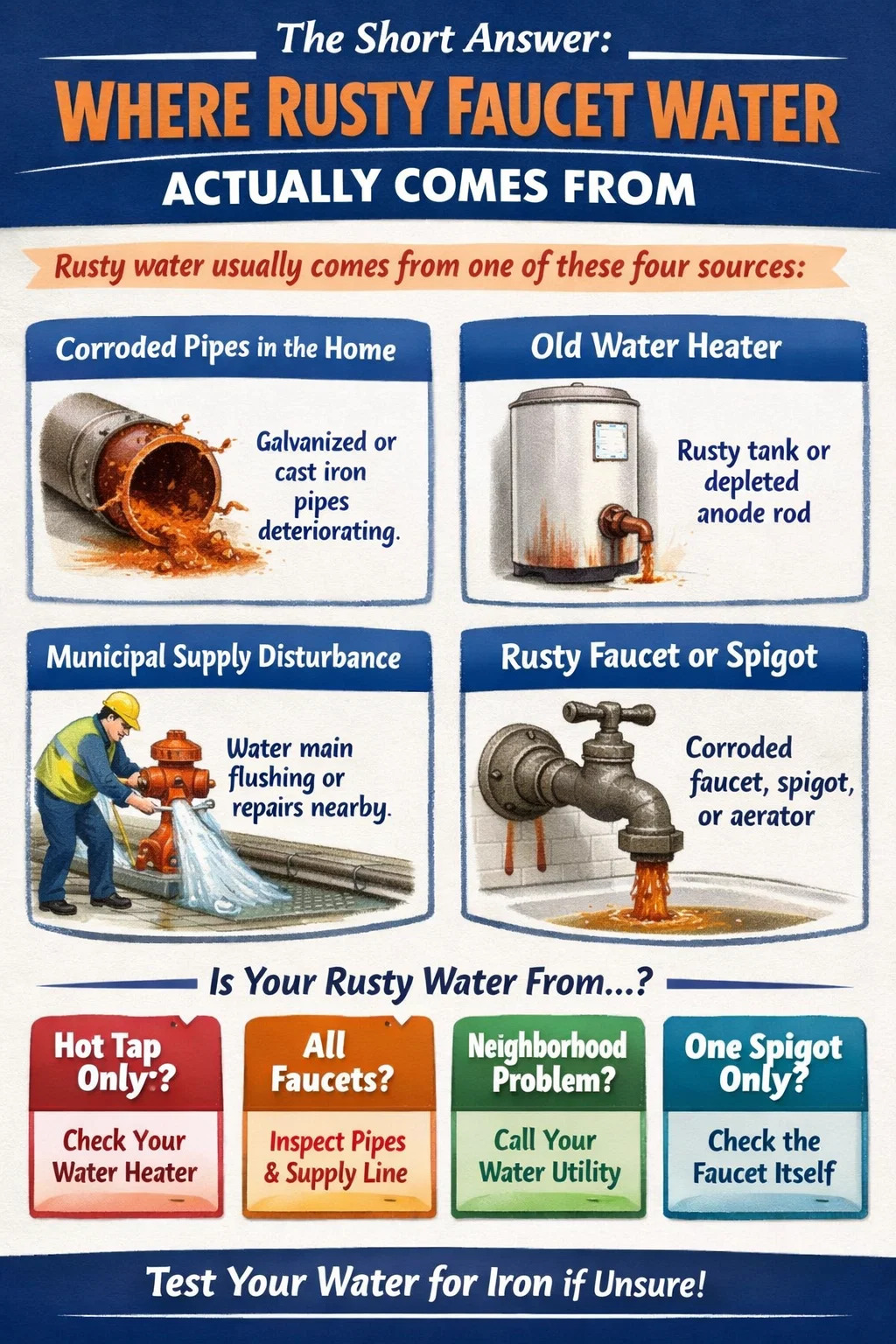
Rusty water from faucets is almost always caused by one of four sources: corroded iron or steel pipes inside your home, a deteriorating water heater, sediment disturbance in the municipal supply line, or an oxidized spigot or fixture at the point of delivery. The orange, brown, or reddish tint you see is iron oxide — rust — that has either flaked off from the interior of pipes and entered the water stream, or dissolved directly into the water as it travels through aging infrastructure.
Identifying the correct source is the first step toward a real fix. Running cold water for two minutes and checking whether the discoloration clears tells you a lot. If it clears, the rust is likely sitting in a section of pipe near the faucet or in the spigot itself. If it stays murky regardless of how long you run it, the problem is deeper — possibly in your main supply line or water heater.
Rusty water is not always a plumbing emergency, but it should never be ignored. Iron levels above 0.3 mg/L — the EPA's secondary maximum contaminant level — cause visible staining, metallic taste, and long-term pipe degradation. Some households test at 10 mg/L or higher when there is active corrosion nearby.
Corroded Iron and Steel Pipes: The Most Common Culprit
Homes built before 1970 often have galvanized steel supply pipes. Galvanized pipes are coated with a layer of zinc, but that protective layer erodes over time — typically within 40 to 70 years of installation. Once the zinc wears away, the underlying steel corrodes rapidly. Rust builds up on the pipe walls, narrows the interior diameter, and eventually flakes off into your water supply.
The corrosion process accelerates when water pH drops below 7.0 (acidic conditions), when dissolved oxygen levels are high, or when water temperature fluctuates frequently. A study published in the journal Corrosion Science found that galvanized pipe corrosion rates doubled when water pH fell from 7.5 to 6.5, demonstrating how even modest pH changes drive significant rust production.
Cast iron pipes — common in older municipal water mains and some residential drain lines — corrode similarly. While cast iron is durable under ideal conditions, it is highly susceptible to tuberculation, a process where layers of rust and mineral deposits build up inside the pipe. When water pressure changes (from a nearby hydrant flush, for example), those deposits dislodge and travel into household plumbing.
How to Tell If Your Pipes Are the Problem
- Rust appears consistently at multiple fixtures throughout the house, not just one faucet or spigot
- Water pressure has noticeably decreased over several months or years
- You find reddish-brown staining inside toilet tanks even without prior rust issues at the faucet
- The home was built before 1960 and no pipe replacement has been done
- A plumber confirms galvanized or cast iron supply lines during an inspection
If corroded pipes are confirmed, partial or full repiping with copper, CPVC, or PEX tubing is the only lasting solution. Whole-house repiping typically costs between $4,000 and $15,000 depending on home size and pipe accessibility, but it eliminates the rust source permanently.
The Aging Water Heater: A Hidden Source Most Homeowners Overlook
If the rusty water only comes from the hot water tap — and the cold tap runs clear — your water heater is almost certainly the cause. The interior lining of a conventional tank water heater includes a glass or enamel coating that protects the steel tank from corrosion. Over time, that lining cracks due to thermal expansion and contraction. Once exposed steel contacts water, rust forms inside the tank and flows directly to your hot water outlets, including kitchen faucets, bathroom faucets, showers, and any outdoor hot spigot connected to the hot line.
Water heaters also contain a sacrificial anode rod — typically made of magnesium or aluminum — designed to corrode in place of the tank itself. When the anode rod depletes completely, the tank begins to rust. Most anode rods last 3 to 5 years, yet the average homeowner never inspects or replaces them. A depleted anode rod is one of the leading causes of premature water heater failure and rust contamination.
Signs the Water Heater Is Rusting Internally
- Rust-colored water only at hot taps, with cold water running clear
- Water has a metallic or sulfur-like odor when drawn hot
- Visible rust stains around the base of the water heater or at the drain valve
- Unit is over 10 years old with no anode rod inspection on record
- Popping or rumbling sounds from the tank (sediment buildup accompanying rust)
A plumber can drain a sample from the tank's drain valve to visually confirm rust. If the interior has rusted significantly, replacement is usually more cost-effective than repair. Standard 40–50 gallon water heaters cost $700 to $1,500 installed, while tankless units run $1,000 to $3,500 but eliminate the internal corrosion issue entirely.
Municipal Water Supply Disturbances: When the Problem Is Outside Your Home
Sometimes rusty water has nothing to do with your internal plumbing. Municipal water distribution systems include miles of cast iron and ductile iron mains, many of which are decades old. Routine maintenance activities — fire hydrant flushing, water main repairs, pressure fluctuations during high-demand periods — can dislodge rust and sediment deposits that have accumulated on the interior walls of those mains. That disturbed sediment travels through the main and enters residential service lines before reaching your spigot or faucet.
The American Water Works Association estimates that the average age of water mains in U.S. cities is over 45 years, with some systems containing pipes installed in the early 1900s. Corrosion within those mains is a documented and widespread issue. Cities like Newark, NJ and Flint, MI have faced extreme versions of this problem, but lower-level municipal rust intrusion is far more common than most residents realize.
A tell-tale sign of municipal origin: rusty water affects multiple homes in your neighborhood simultaneously, or it appears immediately after a noticeable water pressure drop or announced city maintenance. In these cases, running your outdoor spigot at full flow for 10 to 20 minutes is often enough to flush the disturbed sediment out of your service line and restore clarity.
What to Do When the City Is the Source
- Contact your water utility to report the discoloration and ask if maintenance work is in progress nearby
- Run the outdoor spigot at full pressure for 15–20 minutes to flush your service line before testing indoor taps
- Avoid running dishwashers or washing machines until water clarity is restored to prevent staining
- Document the date, duration, and color of discoloration — utilities may offer compensation or acknowledgment
- Install a whole-house sediment filter (5–20 micron) if municipal disturbances happen frequently in your area
Corroded or Worn Spigots and Faucet Fixtures at the Point of Use
Sometimes the rust originates not in the pipes behind the wall but in the spigot or faucet fixture itself. Outdoor spigots — also called hose bibs or sillcocks — are particularly vulnerable because they are exposed to weather cycling, freeze-thaw stress, and extended periods of non-use. The internal components of an iron or low-grade steel spigot can corrode from the inside out, and that rust enters the water stream every time the valve opens.
Indoor faucets made with inferior alloys, particularly lower-cost models manufactured with high zinc-lead content, can develop internal corrosion as well. The faucet aerator — the small mesh screen at the tip of the spigot — traps sediment and rust particles over time. Even when upstream water is clean, a corroded aerator can leach rust back into water as it exits. Replacing or cleaning the aerator alone resolves discoloration in a surprising number of cases.
To isolate whether a specific spigot or faucet is the cause, remove the aerator and run the faucet directly for 30 seconds. If the discoloration disappears without the aerator in place, replace the aerator — they cost less than $5 at any hardware store. If rust persists without the aerator, the problem is in the faucet body or the supply line feeding it.
Outdoor Spigot Corrosion: Why It Happens and How to Prevent It
Outdoor spigots rust for reasons that are different from indoor faucets. Leaving a garden hose attached to a spigot for extended periods traps moisture inside the spigot body, accelerating internal oxidation. Spigots in regions with hard water accumulate mineral scale that eventually traps moisture and promotes rust formation. Freeze damage — when water inside the spigot body expands and cracks the valve seat — allows oxygen and moisture to reach bare metal surfaces, initiating corrosion.
- Disconnect hoses from outdoor spigots when not in use, especially in winter months
- Install frost-free (anti-siphon) spigots in cold climates — they drain automatically and reduce freeze damage
- Replace iron or galvanized steel outdoor spigots with brass models, which are significantly more corrosion-resistant
- Run each outdoor spigot for 30 seconds at the start of spring season to flush any rust that formed during winter inactivity
- Inspect the spigot packing nut annually and replace worn washers to prevent internal moisture accumulation
Well Water Systems and Naturally Occurring Iron
Homeowners on private well systems face a distinct version of the rusty water problem. Groundwater naturally contains dissolved iron — particularly in regions with iron-rich geology such as the Midwest, Mid-Atlantic states, and parts of New England. Unlike rust from corroding pipes, this iron is present in the water before it ever reaches your plumbing. When it contacts oxygen — either in the pressure tank, the pipes, or at the spigot — it oxidizes and turns the characteristic reddish-brown color.
The USGS reports that iron is one of the most common groundwater contaminants in the United States, with an estimated millions of private wells exceeding the 0.3 mg/L aesthetic threshold for iron. Two forms of iron occur in well water: ferrous iron (dissolved, colorless in the well but turns red when exposed to air) and ferric iron (already oxidized, visibly orange or brown directly from the tap).
Well water iron problems require treatment at the source, not just at the spigot or faucet. Common solutions include:
- Iron filters (oxidizing filters): Use air injection or potassium permanganate to convert dissolved ferrous iron to filterable ferric iron, then trap it in a media bed. Effective for iron levels up to 10–15 mg/L.
- Water softeners: Remove low-to-moderate ferrous iron (under 3–5 mg/L) through ion exchange, though they are not designed as primary iron treatment systems.
- Chlorination followed by filtration: Injects chlorine to oxidize iron and kill iron bacteria, followed by a sediment filter to capture the oxidized particles.
- Reverse osmosis (point-of-use): Removes iron at a single spigot or faucet. Effective but does not protect pipes or appliances throughout the home.
A certified water test from a state-accredited laboratory is essential before choosing a treatment system. Testing costs $30 to $100 and identifies the type and concentration of iron, as well as other contaminants that may affect treatment selection.
Iron Bacteria: The Overlooked Biological Component
Not all rust-colored water is purely chemical in origin. Iron bacteria — microorganisms such as Gallionella and Leptothrix — feed on dissolved iron in water and produce a slimy, rust-colored biofilm as a byproduct. This biofilm accumulates inside well casings, pressure tanks, pipes, and even at the spigot head. When the biofilm breaks loose, it creates orange or reddish-brown discoloration that looks identical to conventional rust.
Iron bacteria are non-pathogenic — they do not cause illness — but their presence accelerates corrosion in pipes and fixtures, creates unpleasant odors (often described as oily, cucumber-like, or musty), and can clog well screens and distribution systems. They are notoriously difficult to eliminate once established. Shock chlorination of the well — using a high-concentration chlorine solution — is the standard first-line treatment, but reinfection is common if the source of entry is not identified and sealed.
A simple field test for iron bacteria: collect a water sample in a clear glass and let it sit undisturbed for 24 hours. If an iridescent, oil-like sheen forms on the surface (which does not break apart when disturbed, unlike actual oil), iron bacteria are likely present. A laboratory culture test can confirm the species and concentration.
Comparing the Causes: A Quick Reference Guide
| Cause | Affects Hot, Cold, or Both? | Single Fixture or Whole House? | Typical Fix |
|---|---|---|---|
| Corroded galvanized pipes | Both | Whole house | Repipe with copper or PEX |
| Rusting water heater | Hot only | All hot fixtures | Replace water heater or anode rod |
| Municipal main disturbance | Both (cold primarily) | Whole house or neighborhood | Flush outdoor spigot; notify utility |
| Corroded spigot or faucet | Both | Single fixture | Replace aerator, faucet, or spigot |
| Dissolved iron in well water | Both | Whole house | Iron filter or water softener |
| Iron bacteria | Both | Whole house | Shock chlorination; continuous disinfection |
How Water Chemistry Accelerates Rust Formation in Pipes and Spigots
Water chemistry plays a significant role in how quickly corrosion develops in any iron or steel component — whether that is a pipe, a water heater, or an outdoor spigot. Understanding a few key parameters helps explain why some homes develop rusty water faster than others, even with identical plumbing materials and ages.
pH Level
Water with a pH below 7.0 is acidic and aggressively attacks metal surfaces. At pH 6.5, iron dissolution rates are measurably higher than at neutral pH. The EPA recommends a pH range of 6.5 to 8.5 for drinking water, but many well systems and some municipal supplies deliver water outside this range. Testing pH is inexpensive and should be the first step in any water quality investigation involving corrosion.
Dissolved Oxygen
Oxygen is a co-reactant in the rusting process. Water that contains high dissolved oxygen — common in surface water sources and aerated well water — oxidizes iron much faster than low-oxygen groundwater. When iron-containing water sits in a pipe overnight (during periods of non-use), dissolved oxygen reacts with iron from the pipe walls and precipitates rust. That is why the first water drawn from a faucet or spigot in the morning is often the most discolored.
Chlorine Residual
Municipal water is typically chlorinated, and that residual chlorine acts as an oxidizing agent. While it is effective at disinfection, residual chlorine also promotes oxidation of iron surfaces inside pipes and at the spigot. Homes at the end of long distribution lines — where chlorine residual drops as it reacts with organic matter in the pipes — may paradoxically have lower corrosion from chlorine oxidation, but higher contamination from biofilm and bacterial growth.
Total Dissolved Solids and Hardness
Hard water (high calcium and magnesium content) can actually protect pipes to some degree by depositing a thin mineral scale on interior surfaces that acts as a partial barrier against corrosion. However, very hard water deposits thick scale that eventually traps moisture against metal surfaces, creating localized corrosion cells. Soft water, while better for appliances and soap lathering, is often more corrosive to metal piping because it lacks the buffering capacity that hard water provides.
Health Implications of Rusty Water: What the Research Actually Shows
The health implications of rusty faucet water depend heavily on the iron concentration and whether other contaminants are present alongside the rust. Iron itself is an essential nutrient and is not classified as a health hazard at the concentrations typically found in residential water. The EPA's 0.3 mg/L secondary standard for iron is based on aesthetic concerns — taste, odor, staining — not toxicity.
That said, rusty water is not necessarily safe to drink or use without qualification. There are several legitimate concerns:
- Lead co-contamination: In homes where rust originates from galvanized pipes, lead is a serious secondary concern. Lead solder used before 1986 can leach from pipe joints alongside rust, particularly in acidic water conditions. The EPA has no safe level for lead in drinking water.
- Hemochromatosis: Individuals with hereditary hemochromatosis — a condition affecting approximately 1 in 200 people of Northern European descent — absorb excess dietary iron. High iron in drinking water can contribute to iron overload in this population.
- Bacterial growth: Iron-rich water supports the growth of iron bacteria and other microorganisms. While iron bacteria are non-pathogenic, their biofilms can harbor other bacteria, including coliform species in poorly maintained systems.
- Appliance and fixture damage: Even at sub-health-threshold concentrations, iron stains laundry permanently, etches glass in dishwashers, clogs irrigation systems, and shortens the service life of washing machines and spigot components.
If you have any doubt about whether your rusty water contains lead or other heavy metals beyond iron, do not rely on visual inspection alone. Commission a full panel water test from a certified laboratory before drawing conclusions about safety.
Step-by-Step Diagnostic Process for Rusty Water
Rather than guessing or calling a plumber immediately, follow this systematic diagnostic process to identify the source before spending money on repairs or treatment.
- Check hot vs. cold separately. Run only the cold tap and observe. Then run only the hot tap. If rust appears only in hot water, the water heater is suspect. If both are rusty equally, the source is upstream — municipal supply, service line, or whole-house pipes.
- Test multiple fixtures. Check the bathroom faucet, kitchen faucet, and an outdoor spigot. If only one fixture is rusty, the problem is localized to that fixture or the line feeding it. If all fixtures are affected, the source is more centralized.
- Remove and inspect the aerator. Unscrew the aerator from the tip of the affected faucet or spigot and check for rust buildup. Run water without the aerator for 30 seconds. If it clears, replace the aerator.
- Check with neighbors. Ask whether adjacent homes are experiencing similar discoloration. Simultaneous rust in multiple homes confirms a municipal supply issue.
- Inspect the water heater drain. Attach a hose to the drain valve at the base of the water heater and open it briefly. Severely rusty water from the drain confirms internal tank corrosion.
- Test the water. Order a water test kit or hire a certified lab for iron, pH, lead, and total dissolved solids. This removes ambiguity and gives you data to base treatment decisions on.
- Call a licensed plumber for inspection. If the problem persists or the source remains unclear after self-diagnosis, a plumber with a pipe camera (video inspection) can look inside service lines and identify corrosion without destructive access.
Long-Term Prevention: Keeping Faucets, Spigots, and Pipes Rust-Free
Once the immediate rust problem is resolved, proactive maintenance dramatically reduces the likelihood of recurrence. Most rust-related water problems do not happen overnight — they develop over years of neglect or deferred maintenance. These practices extend the service life of your plumbing and protect water quality throughout the system.
Annual Maintenance Tasks
- Flush and inspect the water heater, checking the anode rod for depletion. Replace the rod if it is less than half its original diameter.
- Clean faucet aerators by soaking in white vinegar for one hour, then brushing with a soft toothbrush to remove mineral and rust deposits.
- Run each outdoor spigot fully open for one minute at the start of each season to flush accumulated rust from the valve body and connected supply line.
- Test well water annually for iron, pH, bacteria, and any other parameters relevant to your regional geology.
- Inspect exposed pipes under sinks and in crawl spaces for surface rust, weeping joints, or staining that indicates active corrosion inside the pipe wall.
Longer-Term Upgrades Worth Considering
- Whole-house sediment filter: A 5-micron filter at the main entry point traps rust particles before they reach any faucet or spigot. Filter cartridges cost $10–$30 and should be replaced every 3–6 months depending on water quality.
- Phosphate injection system: Used by some municipalities and available for residential use, these systems introduce a small amount of food-grade phosphate into the water supply, which coats pipe walls and inhibits iron dissolution and lead leaching.
- Tankless water heater: Eliminates the storage tank entirely, removing the largest corrosion risk in most hot water systems. Modern tankless units last 20+ years with proper maintenance, compared to 8–12 years for conventional tank heaters.
- Brass or stainless steel spigots: When replacing outdoor spigots, choose solid brass or stainless steel models over galvanized iron or budget zinc alloy. The initial cost difference is minimal — roughly $15 vs. $40 — but the service life difference is decades.
- pH correction system: If water tests acidic (below 7.0), a calcite neutralizer filter or soda ash injection system raises pH into the corrosion-resistant range and significantly slows iron leaching from all metal components throughout the system.
Addressing rust at its source — whether that is a corroded pipe, a failing water heater, a worn spigot valve, or high-iron well water — is far more effective than attempting to treat the symptom at the point of use. The tools and methods to diagnose and fix the problem are well-established, the costs are manageable when caught early, and the alternative — continued exposure to rusty water with its attendant staining, metallic taste, and accelerating pipe damage — makes early action the only reasonable course.